Duke Syrach
A name, not a biography
In the printed Grimorium Verum, Syrach is the title under which eighteen spirits are gathered —not a demon with a biography, office or seal of his own like those of the Ars Goetia. Honesty first: nearly everything circulating as “Syrach's powers” in fact belongs to those eighteen. Here we gather only what the sources attest.
The one passage that names him (printed Verum)
The Grimorium Verum —printed in the 18th c., though falsely dated “Memphis 1517”— closes its list of spirits with a single sentence introducing the duke:
Il y a encore d'autres Démons outre les susdits, qui sont sous le Duc Syrach.
“There are yet other Demons, besides the aforesaid, who are under the Duke Syrach.”
It then names the eighteen —and it is they, not Syrach, who each receive an office and a character. In the printed Verum Syrach has no seal or office of his own: he is the heading of the sub-list. [documented · Grimorium Verum, ed. J. H. Peterson]
The earlier stratum: De Secretis (17th c.)
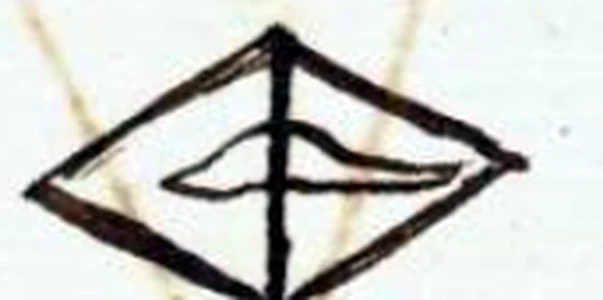
The printed Verum descends from a family of 17th-c. Latin manuscripts, the Clavicula Salomonis de secretis (De Secretis — Dresden N.91, Rps 3352 II, Venice b.93). There Syrach is more sharply defined: not a mere heading but one of Lucifer's dukes, and —unlike the printed Verum— with a character of his own, given in two forms:
Duces Luciferi sunt Syrach apud Europeos, vel apud Afros Satanachi. […] Sub duce Syrach sunt 18.
“The dukes of Lucifer are Syrach among the Europeans, or among the Africans Satanachi. […] Under Duke Syrach there are 18.”
In other words, the name loses relief on its way into print. In the older stratum he is a duke with a character of his own; in the Verum he shrinks to a rubric. And that character does survive —shown below, cropped from the facsimile where the manuscript itself labels it “Syrach”. [documented · De Secretis, ed. Peterson]
📖 Read the full printed Grimorium Verum (Plaingière ed., 18th c.) —with its facsimile, transcription and translation— in our library edition.
The eighteen in the manuscript (facsimile)
The De Secretis manuscript (Clavicula Salomonis de secretis) lists the eighteen with their powers in Latin —the very source from which, on each entry, we quote each spirit's office—. Here you see it in the scribe's own hand, transcribed by us. Collation note: in the manuscript the office of day and night belongs to Clisthert (no. 8, “Diem et Tenebras ut iubebit…”), whereas the printed Grimorium Verum (Plaingière) attributes it to Clauneck: a real variant between manuscript and print.
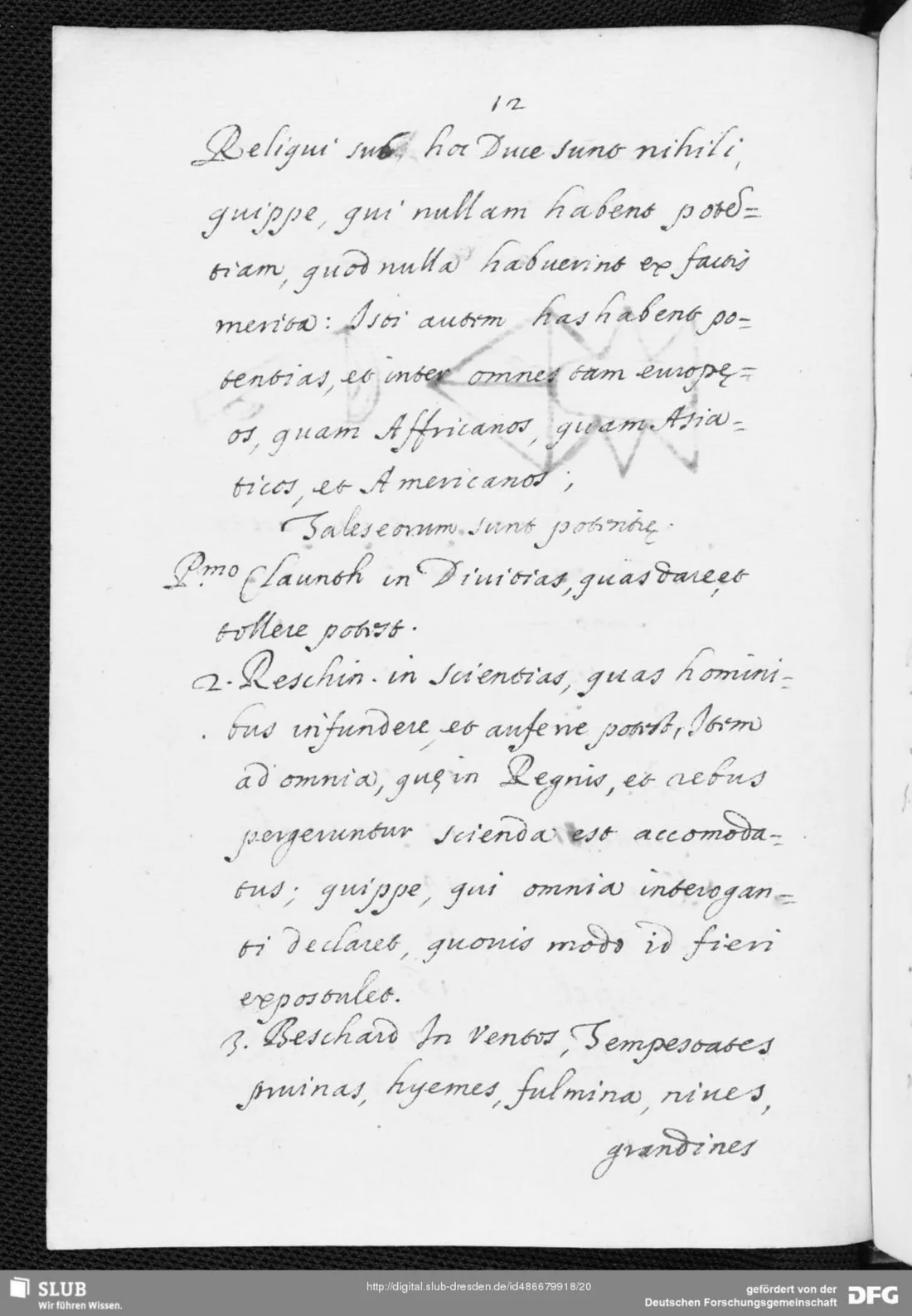
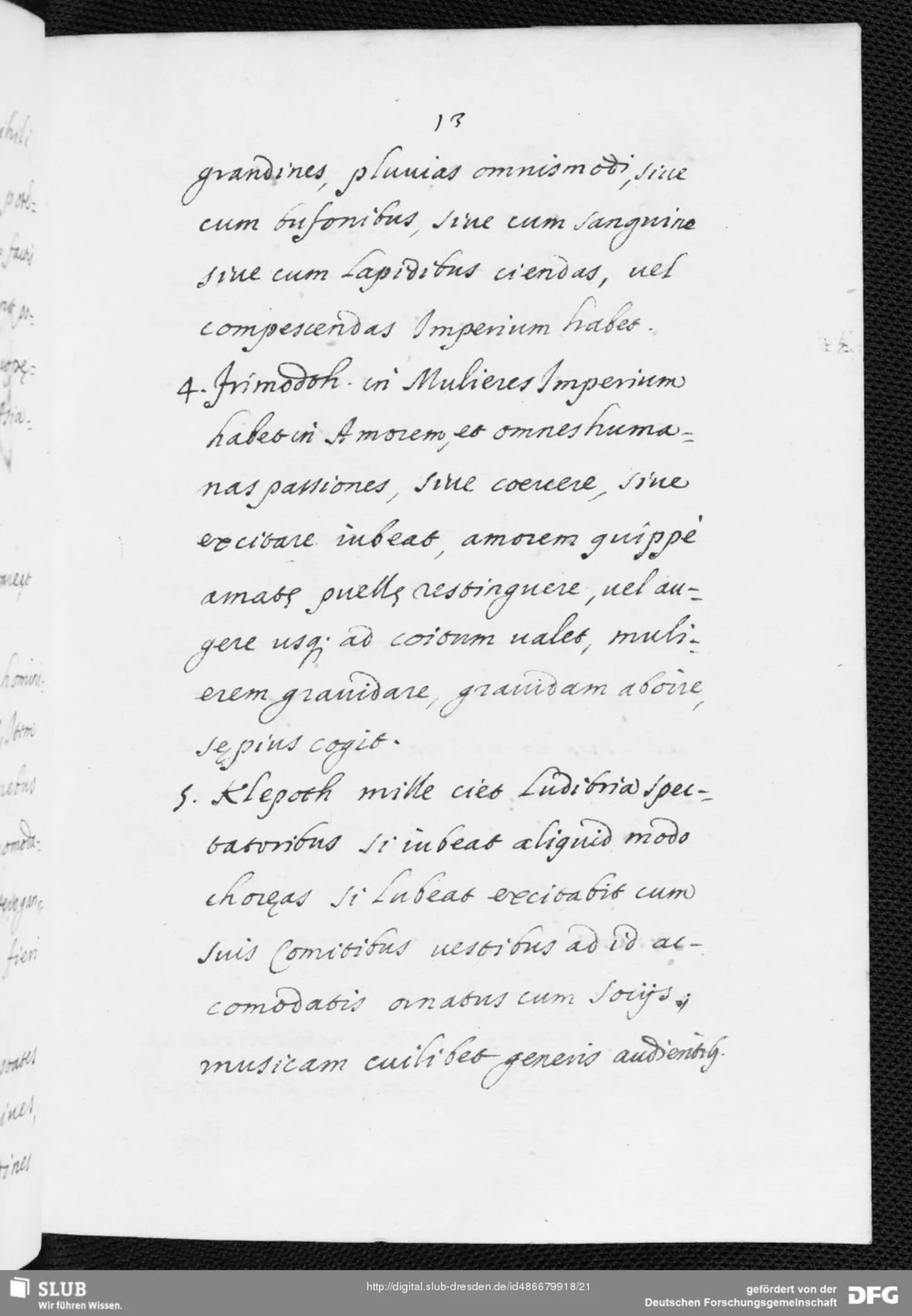
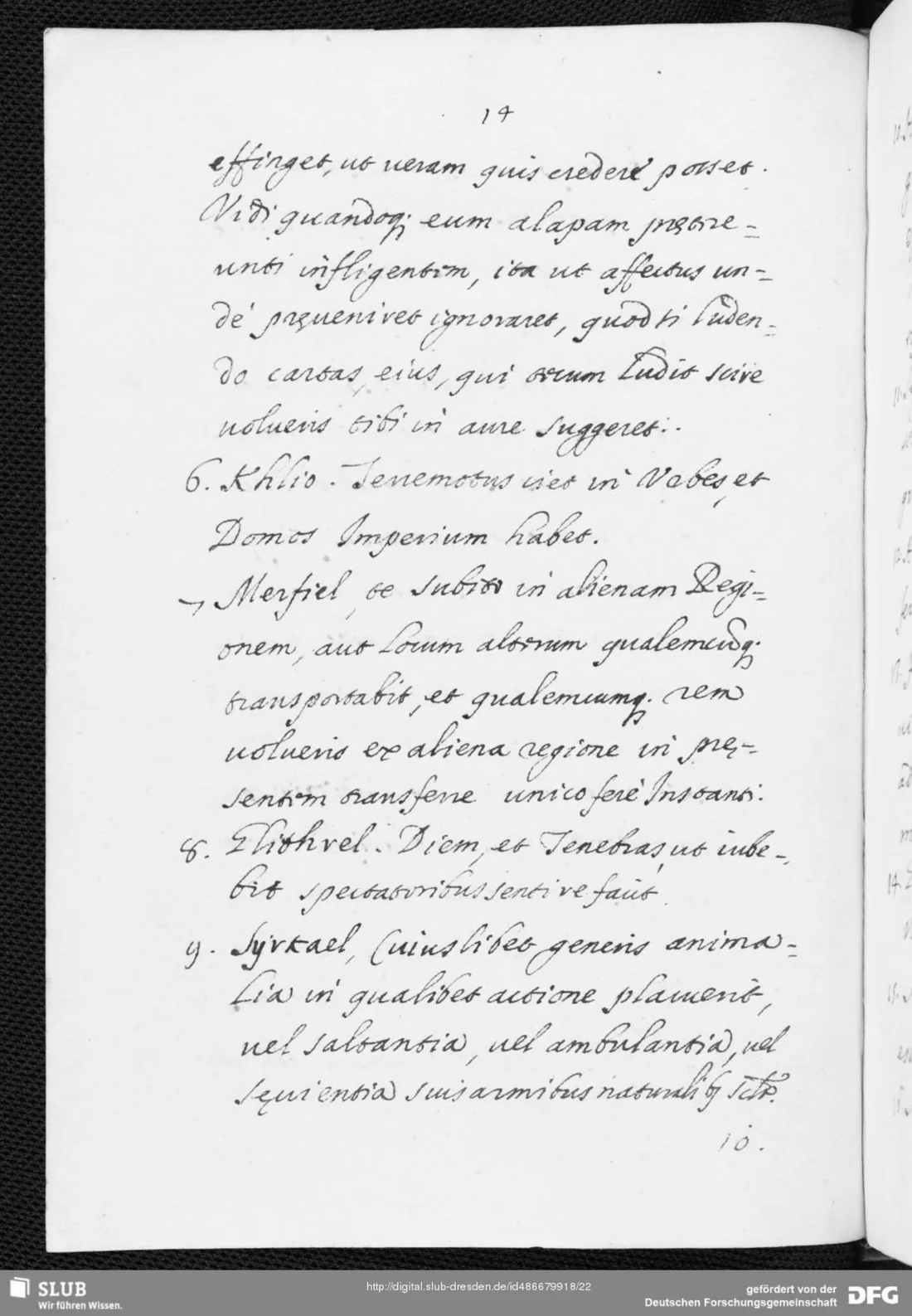
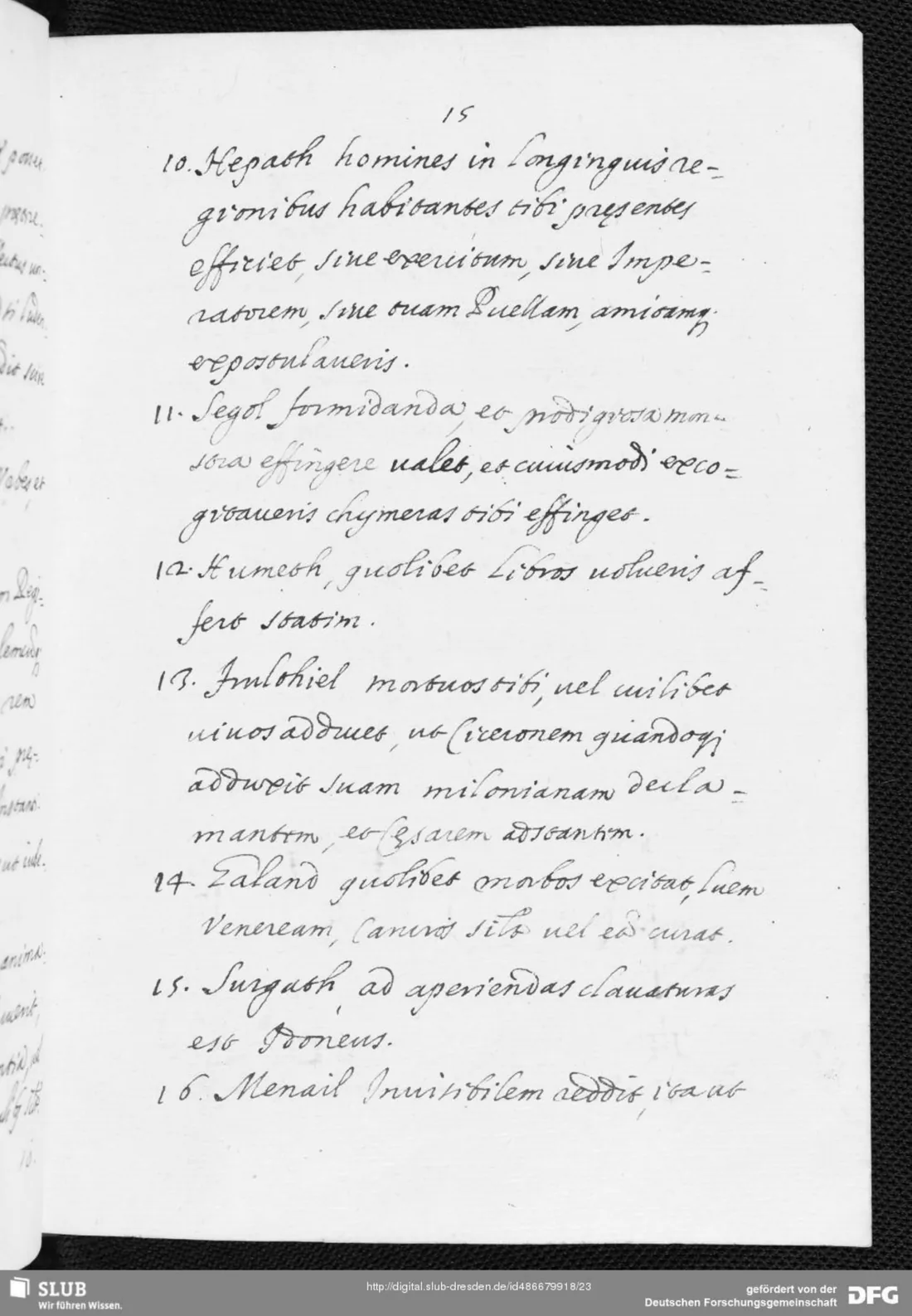
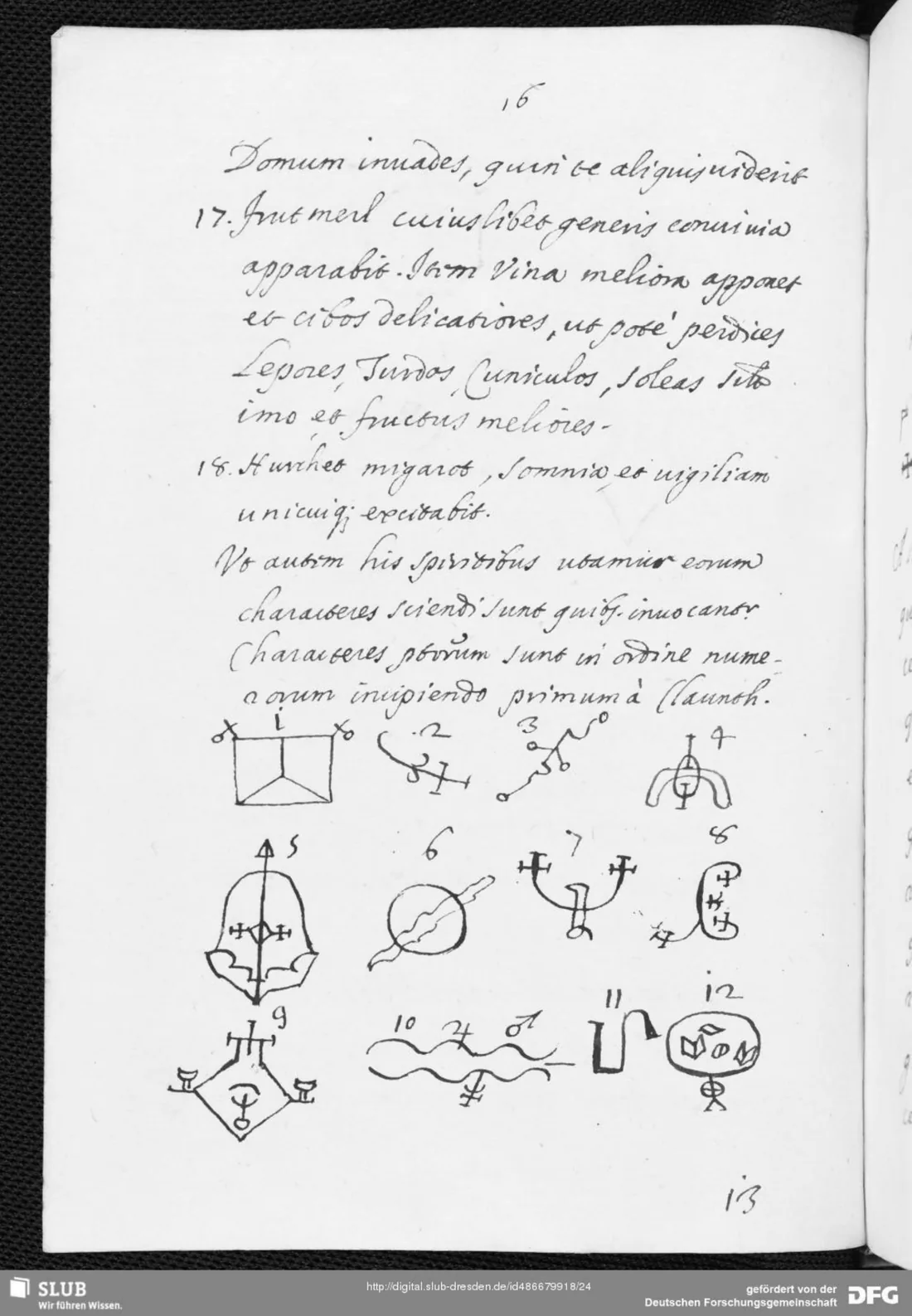
Facsimile: SLUB Dresden, Mscr.Dresd.N.91 (17th c.), Public Domain Mark 1.0. Our own transcription (CC-BY 4.0).
The character of Syrach
The printed Grimorium Verum omits Syrach's seal, but the De Secretis manuscript (SLUB Dresden, Mscr.Dresd.N.91, 17th c.) draws it and labels it in its own hand: “Duces Luciferi sunt Syrach, et Satanachi; eorum characteres tales…”. It gives two forms, by region. This is a character self-identified in the source, not a reconstruction of ours.
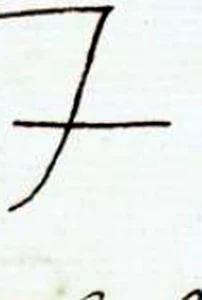
Facsimile: SLUB Dresden, Mscr.Dresd.N.91 (17th c.), Public Domain Mark 1.0. The same diamond form appears labelled “Sirachi” in ms. L1202 (appendix to Peterson's edition).
Where he sits in the hierarchy
The Verum orders its spirits in three tiers. Syrach is not at the top: he belongs to the ducal tier, below the three superiors.
- The three superiorsLucifer · Beelzebuth · Astaroth
- Their subordinatesSatanachia · Agalierept — Tarchimache · Fleruty — Sargatanas · Nebiros
- The duke of the eighteenSyrach — and under him, the 18 practical spirits
The eighteen under Syrach
These are the spirits the source places under his command. Each entry separates the documented from the reconstructed:
Not to be confused
Scirlin (or Scyrlin) is a different figure in the same Verum: the messenger by whose character the other spirits are made to appear. The manuscript variant tables list him as a separate entry. Modern practice sometimes merges them; the sources keep them apart.
They are the same duke, not different entities: the manuscripts spell the name many ways —Syrach, Syrac, Scirach, Syriach and Sirachi / Syrachi (mss. L1202 / W4667, in Peterson's table of variants)—. We use “Syrach”, the most widespread spelling. Lucifer's list confirms it: “the dukes of Lucifer are Syrach and Satanachi”.
Ecclesiasticus (the book of Jesus ben Sira, “Sirach”) is a biblical wisdom text. The similarity in sound is coincidental: no source before 1800 links Duke Syrach to Ben Sira or to that book. It is a homonymy to discard, not a datum.
Sources
Grimorium Verum and Clavicula Salomonis de secretis (De Secretis), critical editions by Joseph H. Peterson (Esoteric Archives), with his table of name variants; A. E. Waite, The Book of Ceremonial Magic (1911), chapter on the Grimorium Verum. Historical, educational material; we always separate the documented from the reconstructed.
grimorium.lat · Grimorium Verum