
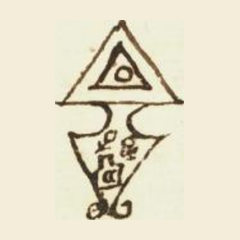
What you ask of it
Resurrects the dead.
Ancient forms
Frulthiel
First documented attestation
In the De Secretis manuscripts (Clavicula Salomonis de secretis, 17th c. — Dresden N.91, Rps 3352 II, Venice b.93) as «Frulthiel», with its power and its drawn character. This is the stratum preceding the printed Verum.
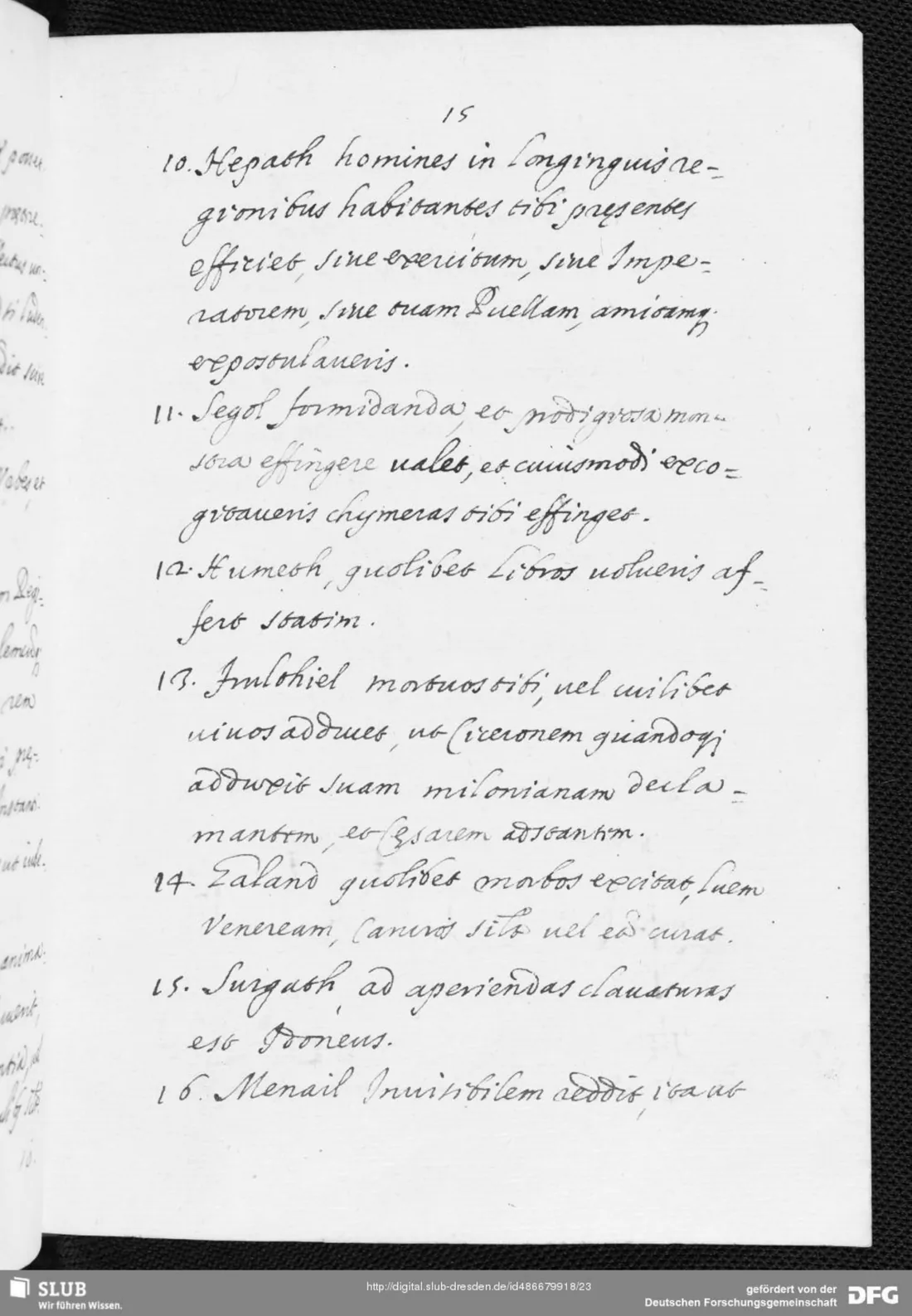
Power in the manuscript (De Secretis, Latin)
«Fruthiel mortuos tibi, vel cuilibet vivos adducet, ut Ciceronem quandoque adduxit suam milonianam declamantem, et Caesarem [ad]cantem [lectura incierta].»
De Secretis · SLUB Dresden, Mscr.Dresd.N.91 · p.23 (ms.15)
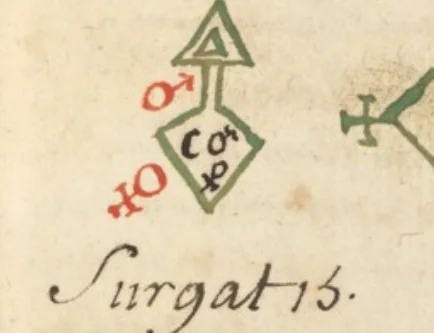
This same character is also drawn (in red and green ink) in L'Art Magique (Wellcome MS.983, ~1709), the French witness closest to the printed Verum — public domain.
The character in the manuscript (colour)
How it is invoked (De Secretis, 17th c.)
So that the dead appear alive to us and speak: write the name of the deceased on dog skin (or parchment) in the shape of a star with dragon's blood; fumigate with incense, myrrh, and bitumen; recite three times 'Furothiel furotheil Talapha coursh / Hebeiuin Inach adonai / Reschit hogma Behours / elchush mirai chebaietai'; a heap of fern/snake's tongue with the character of Furothiel (=Fruthiel) on the head; he appears as a man without hands, black-headed, and naked.
De Secretis · Mscr.Dresd.N.91 · p.40-41 (ms.32-33)
In our library · the printed Verum
The printed Grimorium Verum (Plaingière ed., 18th c.) names Frucissiere among the eighteen spirits under Duke Syrach and sets out its office. Read it with the facsimile in our edition.
Sources
Offices transcribed by us from L'Art Magique (Wellcome MS.983, ca. 1709, public domain) and collated with the 17th-c. De Secretis manuscripts. Historical, educational material.
grimorium.lat · Grimorium Verum