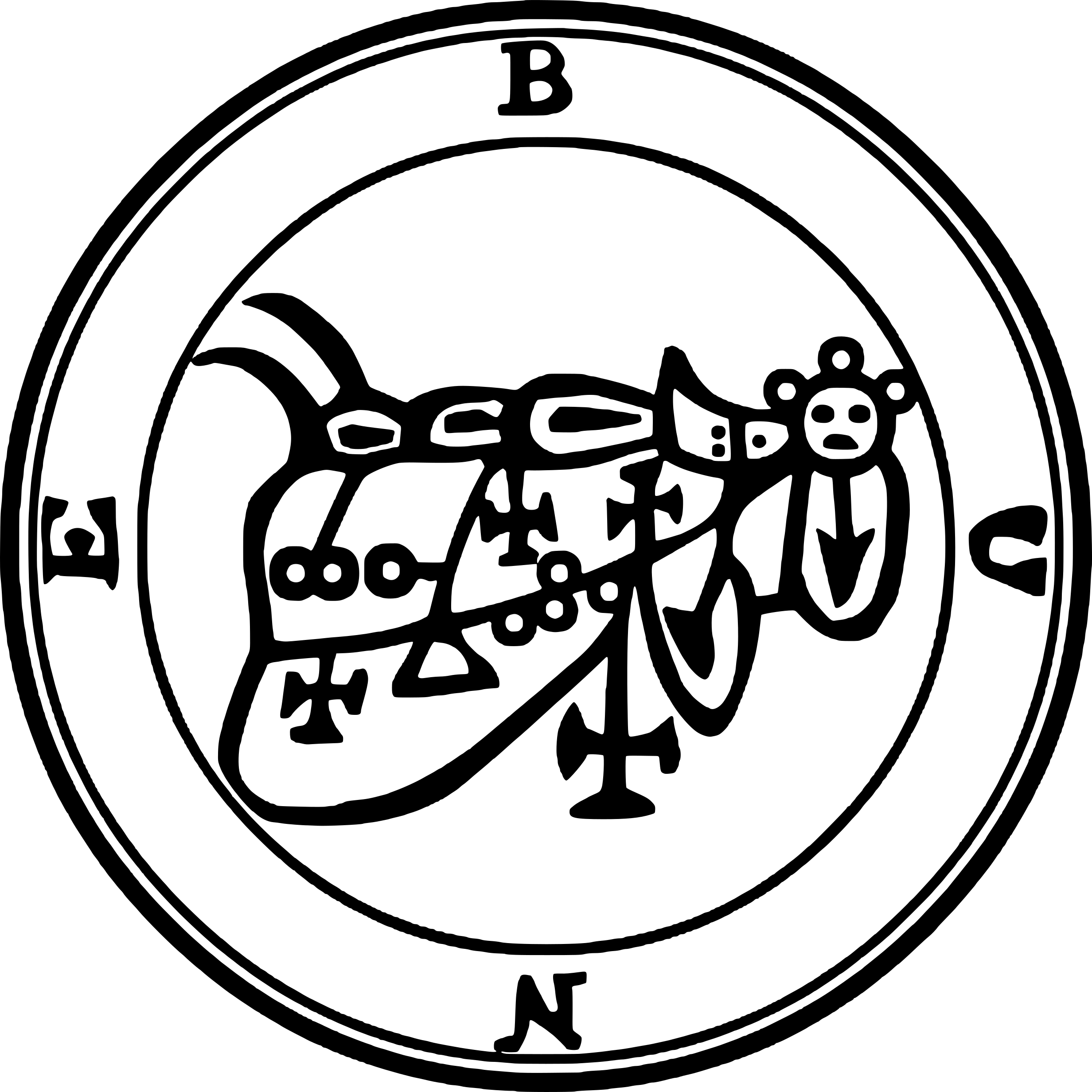
Bune is a Duke of the Ars Goetia, ruling 30 legions of spirits.
Key facts
| Rank | Duke |
|---|---|
| Legions | 30 |
| Powers | The dead, Wealth & treasure, Eloquence, Knowledge & sciences |
| Enn (modern chant) | «Wehl melan avage Bune tasa» |
| Alternate names | Bimé |
| Sources | Ars Goetia, Pseudomonarchia |
| Seal no. | 26 / 72 |
Bune holds a central place in our practice, but we neither expect nor ask visitors to share or adopt this devotion.
On this page
How it appears
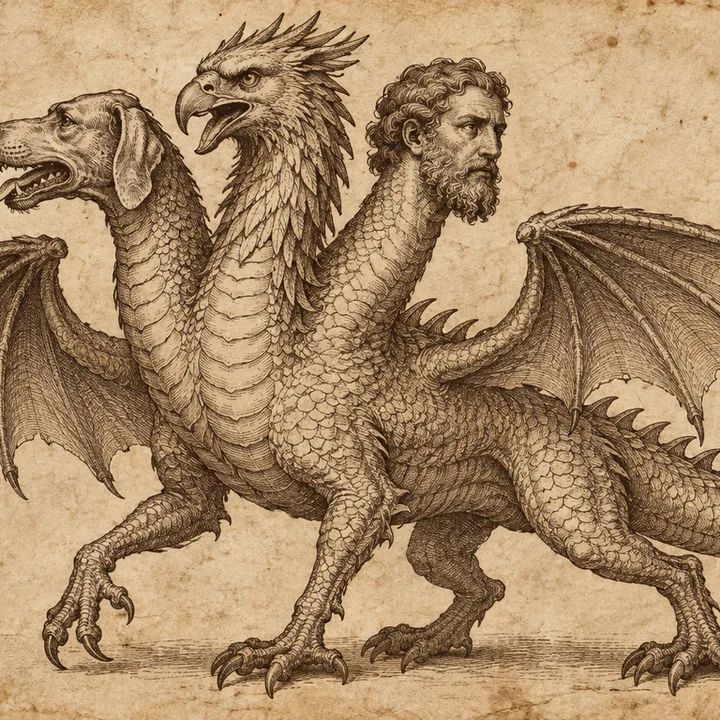
Three heads—of a dog, of a griffin, and of a man—in the form of a dragon.
What you ask of it
He changes the place of the dead and makes spirits gather upon the tombs. He gives riches, wisdom, and eloquence, and answers truly.
Provenance
Bune appears in Weyer’s Pseudomonarchia Daemonum (1577), and the Ars Goetia preserves him as a duke, with manuscript variants such as Bime or Bimé. His entry derives from the earlier tradition of the Liber Officiorum Spirituum, and the Goetia adds the normal form of seal within the Lemegeton. Already attested in the Livre des Esperitz (15th c.) as «Bune (f181v)» and in the Liber Officiorum Spirituum (Folger V.b.26, 16th c.) as «Busyn (no. 8) (?)».
Name variants across the manuscripts: «Bune» (Sloane 2731 —the basis of the 1904 Mathers–Crowley edition— and already in the Livre des Esperitz, 15th c.); «Bime» (Sloane 3648 and Harley 6483; Sloane 2731 itself notes that «in another copy, Bime»); «Bimé» with an accent is an editorial spelling by Mathers–Crowley, absent from the manuscript; and «Busyn», so in the Liber Officiorum Spirituum (Folger V.b.26), though its identification with Bune is uncertain.
The sigil (seal) and its variants
The Lemegeton manuscripts preserve TWO seals for Bune, both drawn BY HAND in Sloane MS 2731 (fol. 104r, c. 1686): the first form —more complex, marked as the best— and, beside it, a second one. For each we show the manuscript FACSIMILE (the scan) and our gold VECTORIZATION, traced directly from it. Weyer's Pseudomonarchia Daemonum (1577) includes no seals: he left them out on purpose.
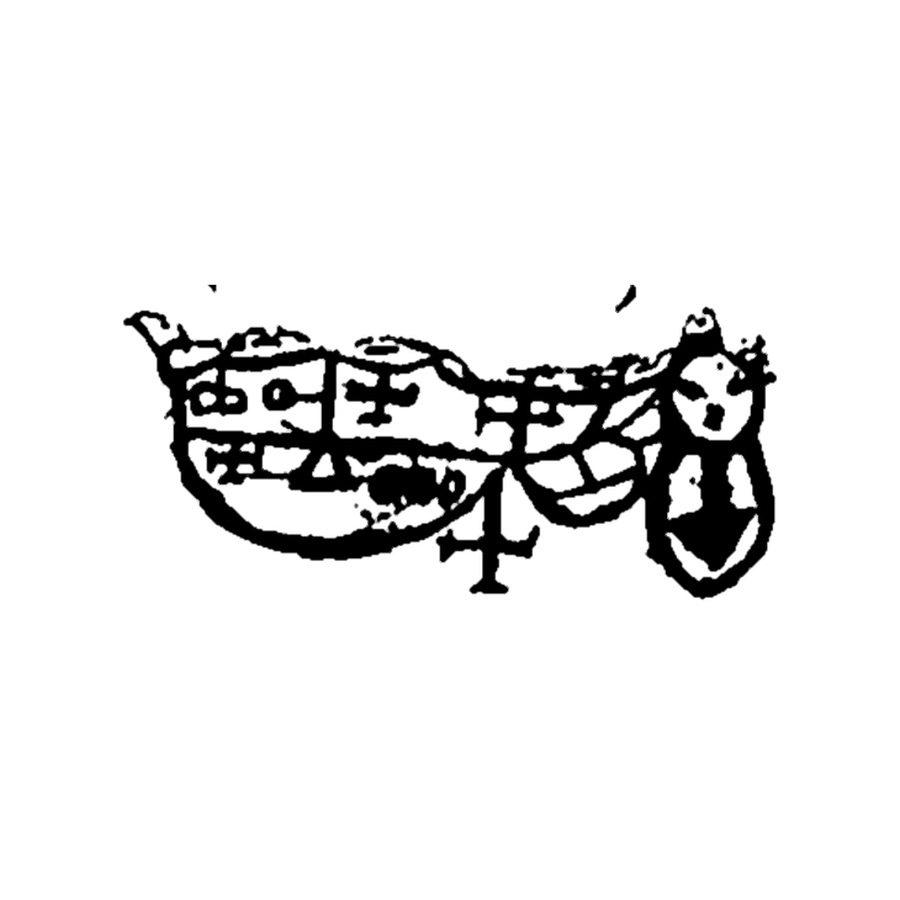 Manuscript · Sloane 2731, fol. 104r
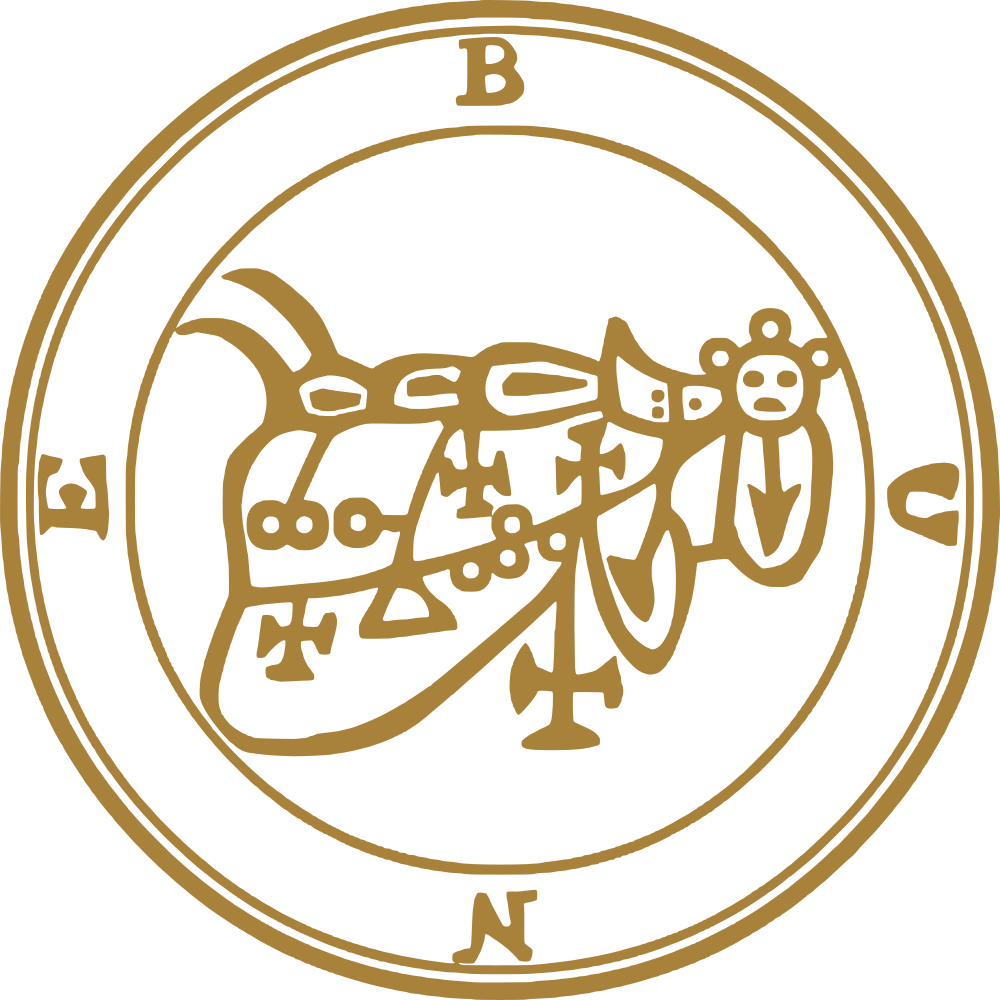 Vector seal · Mathers–Crowley (1904)
The first form, more complex; the entry itself marks it as the best.
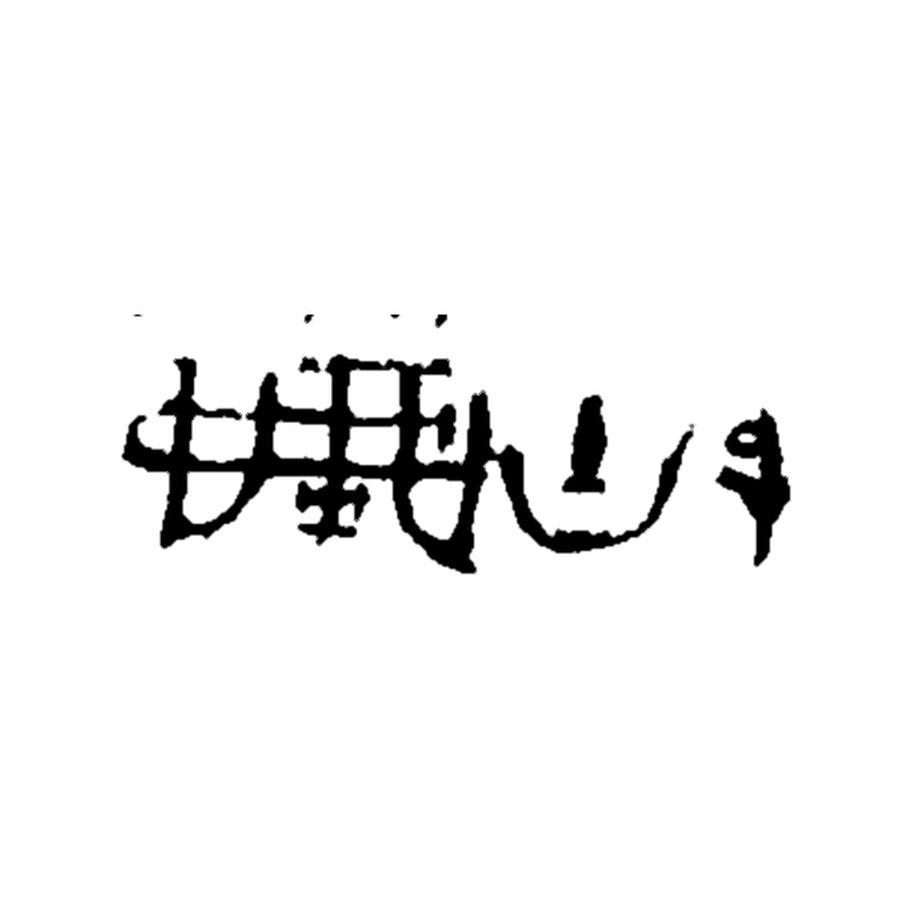 Manuscript · Sloane 2731, fol. 104r
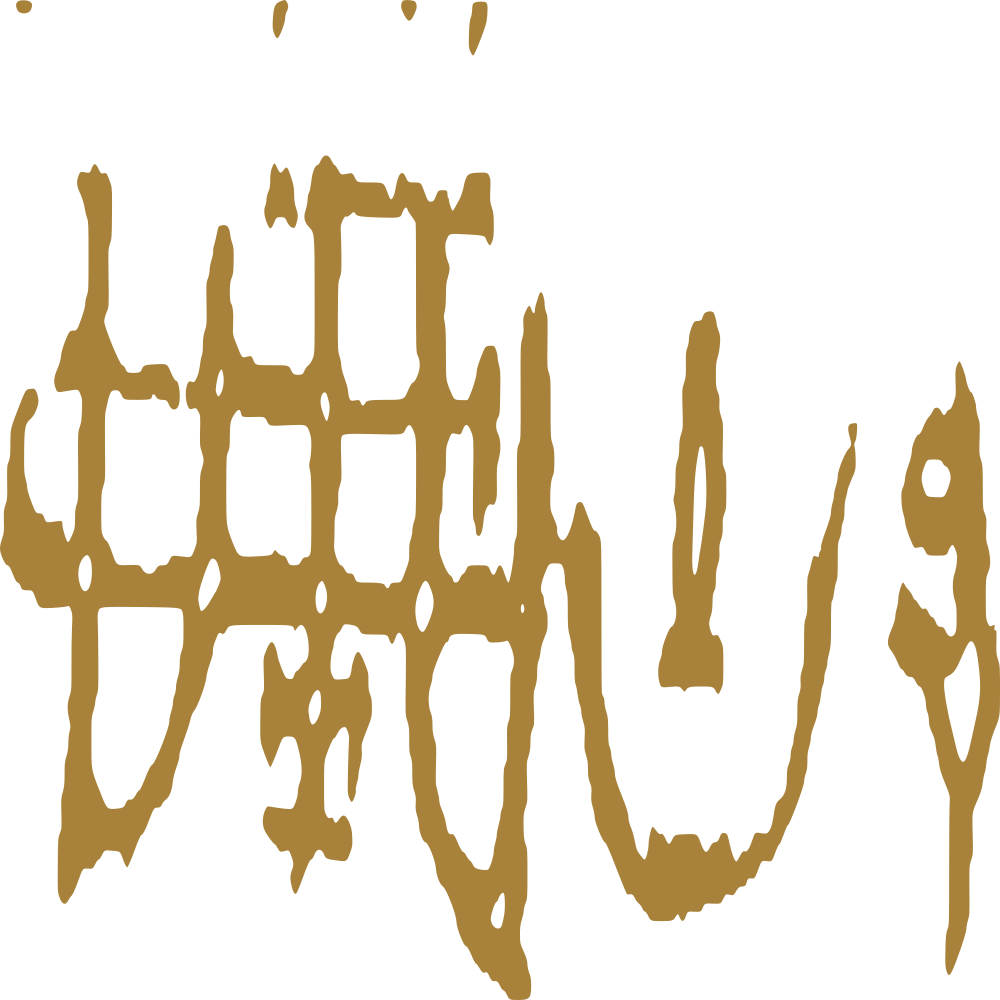 Vector seal · Mathers–Crowley (1904)
The second form, another character that may be used instead of the first.

The main image and SVG/PNG downloads reproduce the printed form of S. L. MacGregor Mathers and Aleister Crowley's 1904 edition, using the normal vector pack documented on Wikimedia Commons (public domain/CC0). The Sloane MS 2731 facsimile remains separate for comparing manuscript variants; it is not used as the main image.
The FULL manuscript facsimile («Lemegeton, Clavicula Salomonis», Sloane MS 2731) is in our library; the original is held at the British Library (Sloane MS 2731).
The documentary chain
Each link, with its quote in the original language and its translation. We honestly tell what was already there from what each copy added.
Bune est ung grant duc qui faict les corps aler et venir d'un lieu en aultre chemyner, et faict home riche et parler saigement devant toutes gens, et donne vroye responce de ce que on luy demande, et a trente-cinq legions.
Bune is a great duke who makes bodies come and go from one place to another, makes a man rich and speak wisely before all people, gives a true answer to whatever is asked of him, and has thirty-five legions.
The oldest trace. The funerary trait (moving bodies) and the gift of wealth and eloquence are already here, but there is still NO dragon and no three heads.
Bune Dux magnus et fortis, apparet ut draco, tribus capitibus, tertium vero assimilatur homini. Muta loquitur voce. Mortuos locum mutare facit, et daemones supra defunctorum sepulchra congregari. Omnimodo hominem locupletat, redditque loquacem et sapientem. Ad quaesita vere respondet. Huic legiones parent triginta.
Bune, a great and strong duke, appears as a dragon with three heads, the third of which resembles a man. He speaks with a hushed voice. He makes the dead change place and devils gather upon the sepulchres of the deceased. He enriches a man in every way, makes him eloquent and wise, and answers truly. Thirty legions obey him.
The leap into print, by the physician and demonologist Johann Weyer, a disciple of Agrippa. Here the DRAGON and the three heads appear for the first time — but only the third is described, «like a man»; the other two are left unspecified.
Bune is a great and a strong Duke, he appeareth as a dragon with three heads, the third whereof is like to a man. He speaketh with a divine voice. He maketh the dead to change their place, and devils to assemble upon the sepulchres of the dead. He greatly enricheth a man, and maketh him eloquent and wise, answering truly to all demands, and thirty legions obey him.
It is Weyer, word for word, rendered into English seven years later. The chain is not reinvented: it is copied. There are still no specific three heads.
The Twenty-sixth Spirit is Bune. He is a Strong, Great and Mighty Duke. He appeareth in the form of a Dragon with three heads, one like a Dog, one like a Gryphon, and one like a Man. He speaketh with a high and comely Voice. He changeth the Place of the Dead, and causeth the Spirits which be under him to gather together upon your Sepulchres. He giveth Riches unto a Man, and maketh him Wise and Eloquent. He giveth true Answers unto Demands. And he governeth thirty Legions of Spirits.
Here, and ONLY here, do the three specific heads finally appear: dog, gryphon, and man. Neither the Livre, nor Weyer, nor Scot specified them. The image everyone repeats today is born at the last link, not the oldest.
How it is summoned
In antiquity
According to the Ars Goetia, the operation is the same for all 72 spirits:
- The magician draws the magic Circle and never steps out of it during the whole work.
- A few paces away he draws the Triangle of Art: there, and only there, must the spirit manifest.
- On his breast he wears the lamen bearing the demon's seal, engraved in metal.
- He recites the conjurations, calling it by its names and by the divine names.
- If the spirit resists or delays, the constraint and the 'chain of spirits' are used.
- Once the request is granted, he gives it the license to depart, and never before.
The tradition preserves for Bune no orientation, planetary time, obligatory offering, or exclusive ritual condition.
Source: Ars Goetia (17th c.); already in Weyer’s Pseudomonarchia Daemonum, 1577
The common Goetic operation also adds, when needed: to constrain a resisting spirit (Wellcome MS 110, c74–c78), to show it the Pentacle of Solomon once manifested (Ars Theurgia-Goetia), to work in its planetary hour and day (by rank), and finally to give it licence to depart —and never before (Wellcome MS 110, c53). Practise the full rite at The Practitioner's Table.
What is the “chain of spirits”?
Modern · not ancient
- Print or draw its seal and place it before you on a clean surface.
- Light a candle and, if you wish, some incense; still your mind and set your intention.
- Intone its enn softly and repeatedly, eyes on the seal, until you feel a shift in the air.
- State your request clearly and respectfully, not as a command.
- Give thanks, let the candle burn down a little and close; modern practice is devotional, with no coercive conjuration.
Enn (modern chant): «Wehl melan avage Bune tasa»
Source: Enn of modern demonolatry (lists disseminated by S. Connolly, The Complete Book of Demonolatry, 2006)
Contemporary practice works with him chiefly for prosperity, wealth, and material improvement, expanding his ancient office of enriching and dealing with matters of the dead.
Modern experiences (personal gnosis)
Modern practitioners typically work with Bune to achieve financial stability, wealth acquisition, and in necromantic rites. In contemporary demonolatry, the presence of this spirit is frequently described as grounded, steady, and ancient, offering practical assistance in mundane matters. It is perceived as an approachable yet serious energy that bridges material prosperity with the understanding of the dead. Even so, modern devotional practice tends to use a gold or yellow candle for his association with fortune, rather than the Venusian green that the ceremonial rank scheme would assign a Duke. As unverified personal gnosis (UPG), we maintain a contemporary devotional relationship with Bune as an ally and patron. This is a strictly subjective experience that guides our work and does not constitute any promise of results for others.
Personal gnosis (UPG): how contemporary practitioners say they experience it. This is subjective experience, not a historical source or doctrine; it does not come from the ancient grimoires and may not be real.
Source: S. Connolly, «The Complete Book of Demonolatry» (2006) y «The Daemonolatry Goetia» (2010); práctica general de la demonolatría contemporánea.
Modern correspondences
Modern systems (such as the Golden Dawn, Crowley's 777, or Connolly) assign planetary, elemental, colour or incense correspondences by decan or rank, but these vary between traditions and are not attested in this form in the ancient sources, so we do not fix absolute values here.
What today's practitioners report
Beyond the ancient sources, people who work with Bune today report recurring patterns (subjective experience, not doctrine): money rarely «rains» — rather the spirit OPENS PATHS (jobs, interviews, sales, clients) and expects effort from you plus a realistic route. Many describe her as SWIFT and effective when you put in the work, and as LONG-TERM help that builds stability. She is often perceived as a calm, feminine presence —«the Duchess»—, though others meet a masculine figure (matching the male Duke of the old sources); she is tied both to the HARVEST and fields and to the TOMBS and the dead, and some feel her as a «kind, rich auntie». The signs of contact they describe tend to be SUBTLE —the sigil flickering, a quiet shift in the atmosphere—, not dramatic manifestations: calm is key. It is common to begin by introducing yourself and building a relationship before asking, and to give something as a token of the deal. Ask with measure, not millions.
Offerings commonly given to him
- Oranges and other citrus
- Cool water
- Sweet red wine
- Rum
- Chocolate
- Copper and coins
- A candle (sometimes beeswax)
- A yellow rose, to seal the friendship
- A glass of water, for his travel
- A precious metal or a gem, buried during the hour of the rite
How practitioners invoke him today
In contemporary practice he is approached in two ways. The most common is a simple PETITION: the sigil is drawn or «charged» (two distinct ones are attributed to Bune), an altar is set (a candle and offerings), a clear and reasonable request is stated with a timeframe, and thanks are given on closing. The other is a Goetic-style EVOCATION: gazing at the sigil while reciting his enn until it «opens», welcoming and offering candle/incense/liquor, stating the task with a timeframe, agreeing an offering, and giving the «license to depart». Many begin by INTRODUCING themselves and building a relationship before asking anything, and in the demonolatry style he is INVITED —not forced, unlike the coercive Solomonic method—; some add a chant to ward off impostors before opening the sigil, and some cast a protective circle. On TIMING there is disagreement: some pick Friday or the hour of Venus for her venusian character, others Saturday and the hour of Saturn on the darkest night of the month; nearly all work at night, and some face SOUTH when calling him. Offerings that mark the bond: a yellow rose to seal the friendship, a glass of water for his travel, and —several say— burying a precious metal or gem during the hour of the rite. Modern sources cited: Jason Miller («The Sorcerer's Secrets»), Corwin Hargrove («Goetia Pathworking»), Damon Brand («Demons of Magick»), E. A. Koetting, S. Connolly's demonolatry and forum guides. A recurring WARNING: be SPECIFIC and measured —many caution that Bune «changes your life radically» to deliver—, and expect nothing without doing your part. Beyond wealth, some use him as a psychopomp (necromancy), consistent with his ancient office over the dead. All of this is MODERN practice (personal gnosis), distinct from the historical rite under «How he is summoned».
«She seems to prefer working long-term and building up the momentum — creating opportunities and sending them our way.»— rrose1978 · r/DemonolatryPractices, 2023
«She helped my husband find different avenues of income… but you have to work too.»— Oh_my_god_my_wafflez · r/DemonolatryPractices, 2023
«Bune is known for changing your life radically and indiscriminately to achieve what you asked.»— SkullTraill · WizardForums, 2021
«I used him as a psychopomp in my early days of necromancy.»— The God-King · WizardForums, 2021
«She finds humans silly and endearing. Her energy feels like a kind, rich auntie.»— Vaporwitch · WizardForums, 2026
«Bune, she of the harvest and tombs.»— Vaporwitch · WizardForums, 2026
«Within the half hour… our neighbours came to the door with our beloved cat, healthy and fat.»— uralmaenad · WizardForums, 2026
«Gives nothing without work or effort, lest you become ensnared in his coils.»— eftresq · r/occult, 2020
«A sign is when the sigil flickers slightly. You shouldn't be expecting more than that as a beginner.»— Astraeanna · r/occult, 2020
«He also appeared as a man to me in a dream, not a woman.»— kentree21 · BALG, 2020
«I gave him a yellow rose to symbolize the beginning of our friendship.»— Sgame9403 · BALG, 2020
Reports from contemporary practitioners (personal gnosis, UPG). Not a historical source or a guarantee; subjective experiences, quoted briefly and credited. If you authored a quote and want it removed or linked, contact us.
Frequently asked questions
Who is Bune?
Bune is one of the 72 spirits catalogued in the Ars Goetia (the first book of the Lemegeton, 17th c.) and in Weyer's Pseudomonarchia Daemonum (1577); it is listed with the rank of Duke. It is not a deity or a biblical figure: it is an entry in these historical spirit-catalogues.
What is the sigil (seal) of Bune?
The seal image of Bune that we display and offer for download follows the printed Mathers–Crowley (1904) form, using the normal vector pack documented on Wikimedia Commons (public domain/CC0). The Sloane MS 2731 manuscript facsimile is provided separately because Lemegeton witnesses preserve variants.
What is Bune's rank in the Ars Goetia?
Bune is a Duke, ruling 30 legions of spirits according to the Lesser Key of Solomon.
How do you summon Bune?
According to the ancient sources (the Lemegeton, the Pseudomonarchia Daemonum), Bune is summoned with the goetic rite: the Circle and the Triangle of Art are traced, its seal is engraved and worn, the candles are lit and the conjuration is spoken by the divine names; if it delays, it is constrained, and at the end it is given the licence to depart. This is historical-documentary material, not a how-to for real summoning.
What does Bune do? What is it invoked for?
He changes the place of the dead and makes spirits gather upon the tombs. He gives riches, wisdom, and eloquence, and answers truly.
What sources does Bune come from?
Bune appears in Weyer’s Pseudomonarchia Daemonum (1577), and the Ars Goetia preserves him as a duke, with manuscript variants such as Bime or Bimé. His entry derives from the earlier tradition of the Liber Officiorum Spirituum, and the Goetia adds the normal form of seal within the Lemegeton.
What is the enn (chant) of Bune?
The enn of Bune circulating today is «Wehl melan avage Bune tasa». It is a MODERN demonolatry chant (late 20th c.); it does not appear in the old grimoires.
What is offered to Bune?
Contemporary practitioners commonly offer: Oranges and other citrus, Cool water, Sweet red wine, Rum, Chocolate, Copper and coins, A candle (sometimes beeswax), A yellow rose, to seal the friendship, A glass of water, for his travel, A precious metal or a gem, buried during the hour of the rite. This is MODERN practice (personal gnosis), not a rite from the ancient sources.
Of the same rank · Duke
Of the same power · The dead
→ Where does «your demon by birthdate» come from? See how the different systems distribute the 72 spirits: Goetia Correspondences.
grimorium.lat · Documentary library of ritual magic, demonology and historical grimoires