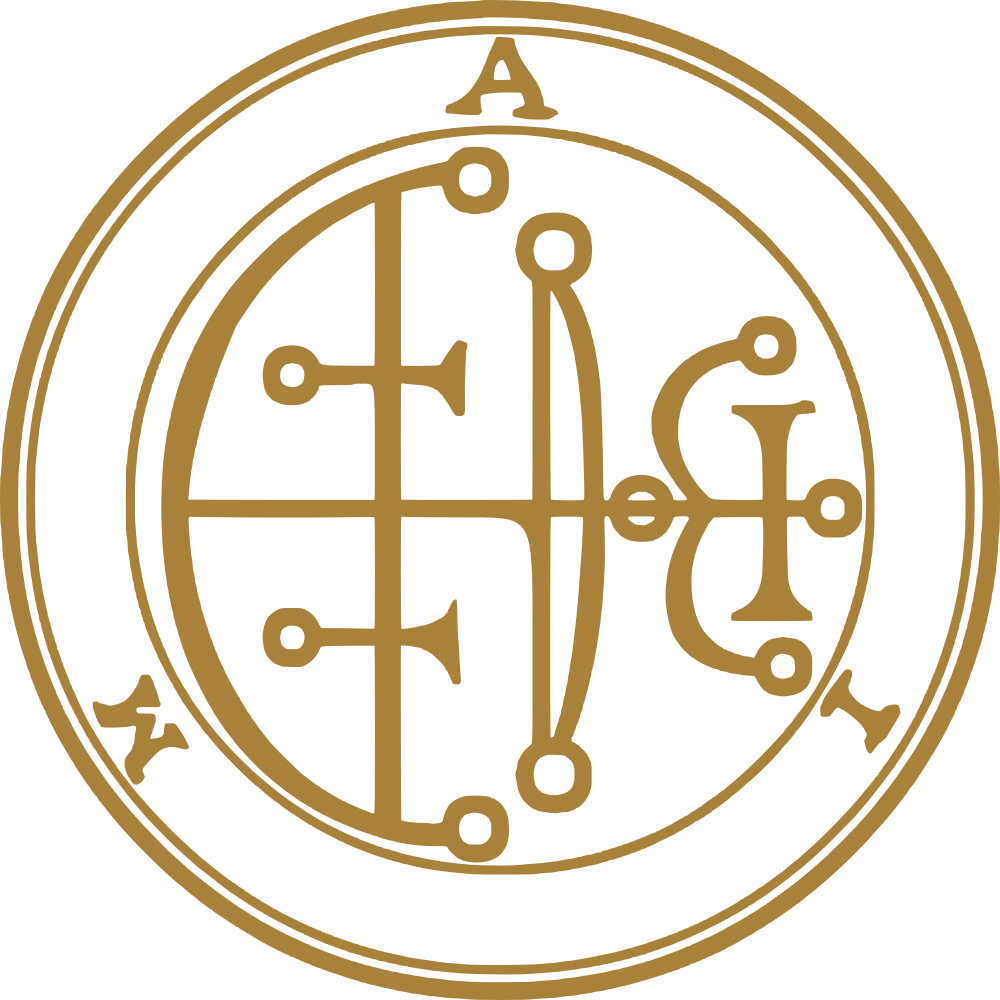
Aim is a Duke of the Ars Goetia, ruling 26 legions of spirits.
Key facts
| Rank | Duke |
|---|---|
| Legions | 26 |
| Powers | Knowledge & sciences, Destruction |
| Enn (modern chant) | «Ayer avage secore Aim» |
| Alternate names | Aym, Haborym |
| Sources | Ars Goetia, Pseudomonarchia |
| Seal no. | 23 / 72 |
On this page
How it appears
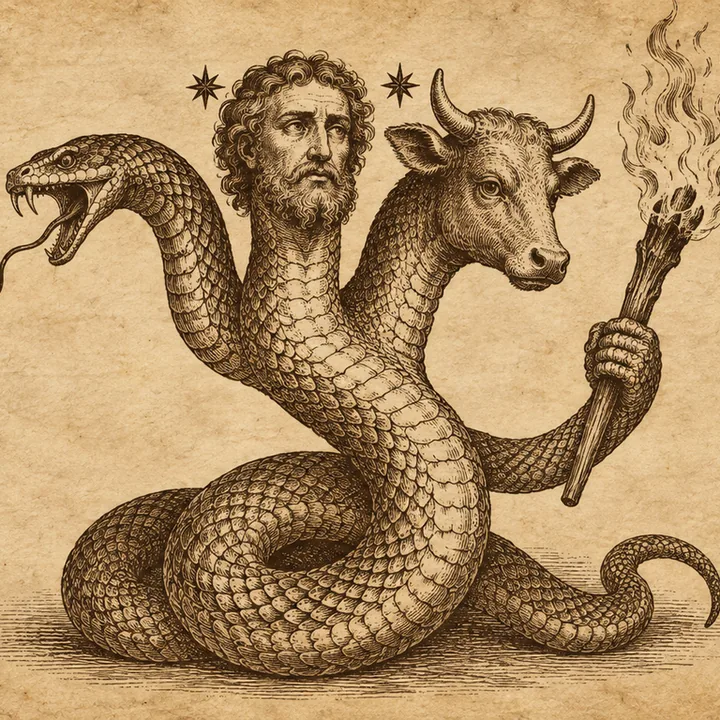
Three heads—of a serpent, of a man with two stars, and of a calf—mounted on a viper, with a lit firebrand.
What you ask of it
He makes men witty in every way; he sets fire to cities, castles, and great places; and he gives true answers concerning private matters.
Provenance
Aim is already in the Pseudomonarchia Daemonum with variants such as Aym or Haborym, famous for the motif of fire. The Ars Goetia takes up that earlier tradition and preserves his three heads, his burning brand, and his capacity to answer concerning private matters. Already attested in the Liber Officiorum Spirituum (Folger V.b.26, 16th c.) as «Pathyn».
The seal: printed edition and facsimile
Aim's main seal follows the printed Mathers–Crowley (1904) form; the Sloane MS 2731 manuscript facsimile is shown separately for comparison.
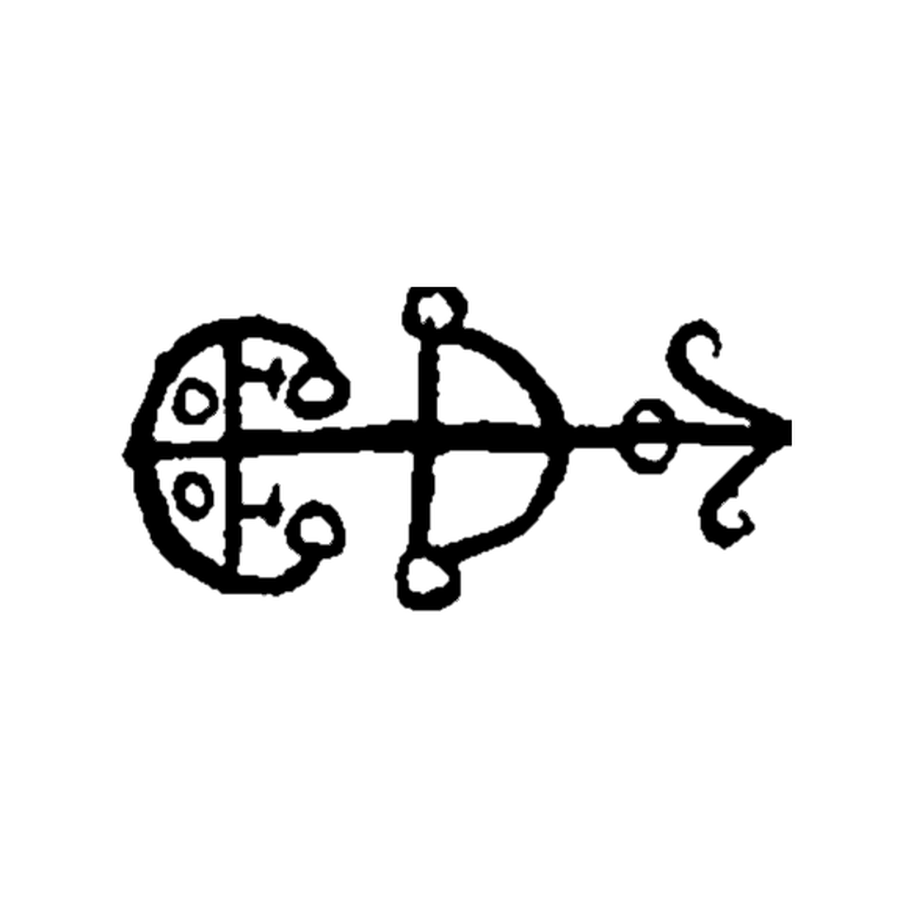
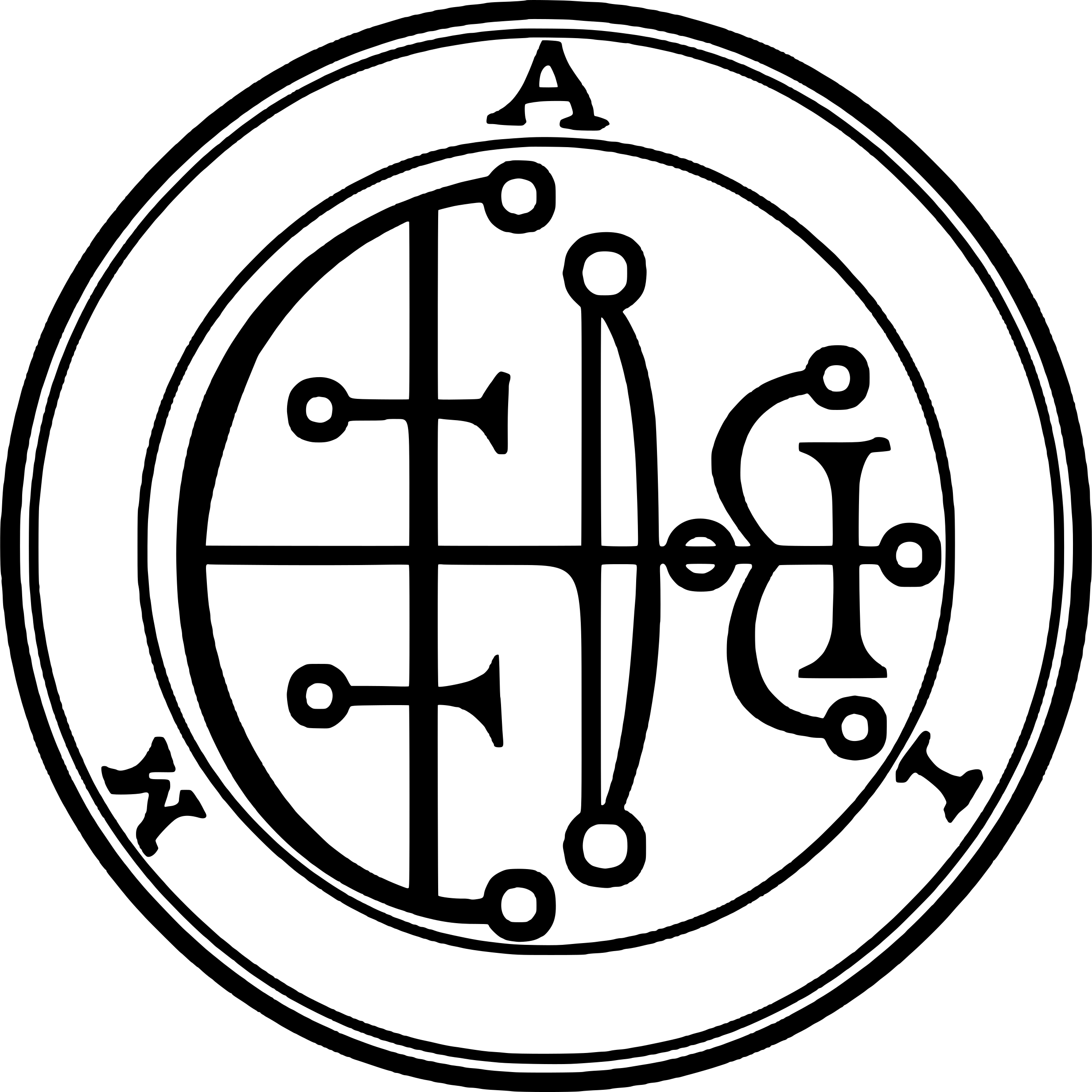
The main image and SVG/PNG downloads reproduce the printed form of S. L. MacGregor Mathers and Aleister Crowley's 1904 edition, using the normal vector pack documented on Wikimedia Commons (public domain/CC0). The Sloane MS 2731 facsimile remains separate for comparing manuscript variants; it is not used as the main image.
The FULL manuscript facsimile («Lemegeton, Clavicula Salomonis», Sloane MS 2731) is in our library; the original is held at the British Library (Sloane MS 2731).
How it is summoned
In antiquity
According to the Ars Goetia, the operation is the same for all 72 spirits:
- The magician draws the magic Circle and never steps out of it during the whole work.
- A few paces away he draws the Triangle of Art: there, and only there, must the spirit manifest.
- On his breast he wears the lamen bearing the demon's seal, engraved in metal.
- He recites the conjurations, calling it by its names and by the divine names.
- If the spirit resists or delays, the constraint and the 'chain of spirits' are used.
- Once the request is granted, he gives it the license to depart, and never before.
Although his image is very specific, no hour, direction, offering, or caution of his own is transmitted for him.
Source: Ars Goetia (17th c.); already in Weyer’s Pseudomonarchia Daemonum, 1577
The common Goetic operation also adds, when needed: to constrain a resisting spirit (Wellcome MS 110, c74–c78), to show it the Pentacle of Solomon once manifested (Ars Theurgia-Goetia), to work in its planetary hour and day (by rank), and finally to give it licence to depart —and never before (Wellcome MS 110, c53). Practise the full rite at The Practitioner's Table.
What is the “chain of spirits”?
Modern · not ancient
- Print or draw its seal and place it before you on a clean surface.
- Light a candle and, if you wish, some incense; still your mind and set your intention.
- Intone its enn softly and repeatedly, eyes on the seal, until you feel a shift in the air.
- State your request clearly and respectfully, not as a command.
- Give thanks, let the candle burn down a little and close; modern practice is devotional, with no coercive conjuration.
Enn (modern chant): «Ayer avage secore Aim»
Source: Enn of modern demonolatry (lists disseminated by S. Connolly, The Complete Book of Demonolatry, 2006)
In modern uses he is related to fire, the controlled destruction of obstacles, and practical ingenuity; these correspondences are contemporary.
Modern experiences (personal gnosis)
Contemporary demonolatry practitioners, particularly in the work of S. Connolly, perceive Aim's presence as an active, focused, and stimulating energy, strongly linked to the element of fire. He is considered a muse for creators and is typically worked with to ignite inspiration, solve complex problems, and burn away creative blocks, transmuting his traditional destructive nature into a force that eradicates mental stagnation.
Personal gnosis (UPG): how contemporary practitioners say they experience it. This is subjective experience, not a historical source or doctrine; it does not come from the ancient grimoires and may not be real.
Source: S. Connolly, «The Daemonolatry Goetia» (2010); práctica demonólatra moderna.
Frequently asked questions
Who is Aim?
Aim is one of the 72 spirits catalogued in the Ars Goetia (the first book of the Lemegeton, 17th c.) and in Weyer's Pseudomonarchia Daemonum (1577); it is listed with the rank of Duke. It is not a deity or a biblical figure: it is an entry in these historical spirit-catalogues.
What is the sigil (seal) of Aim?
The seal image of Aim that we display and offer for download follows the printed Mathers–Crowley (1904) form, using the normal vector pack documented on Wikimedia Commons (public domain/CC0). The Sloane MS 2731 manuscript facsimile is provided separately because Lemegeton witnesses preserve variants.
What is Aim's rank in the Ars Goetia?
Aim is a Duke, ruling 26 legions of spirits according to the Lesser Key of Solomon.
How do you summon Aim?
According to the ancient sources (the Lemegeton, the Pseudomonarchia Daemonum), Aim is summoned with the goetic rite: the Circle and the Triangle of Art are traced, its seal is engraved and worn, the candles are lit and the conjuration is spoken by the divine names; if it delays, it is constrained, and at the end it is given the licence to depart. This is historical-documentary material, not a how-to for real summoning.
What does Aim do? What is it invoked for?
He makes men witty in every way; he sets fire to cities, castles, and great places; and he gives true answers concerning private matters.
What sources does Aim come from?
Aim is already in the Pseudomonarchia Daemonum with variants such as Aym or Haborym, famous for the motif of fire. The Ars Goetia takes up that earlier tradition and preserves his three heads, his burning brand, and his capacity to answer concerning private matters.
What is the enn (chant) of Aim?
The enn of Aim circulating today is «Ayer avage secore Aim». It is a MODERN demonolatry chant (late 20th c.); it does not appear in the old grimoires.
Of the same rank · Duke
Of the same power · Knowledge & sciences
→ Where does «your demon by birthdate» come from? See how the different systems distribute the 72 spirits: Goetia Correspondences.
grimorium.lat · Documentary library of ritual magic, demonology and historical grimoires