TranscripciónInglés (s. XVII)
[Nota final de la Primera Parte:]
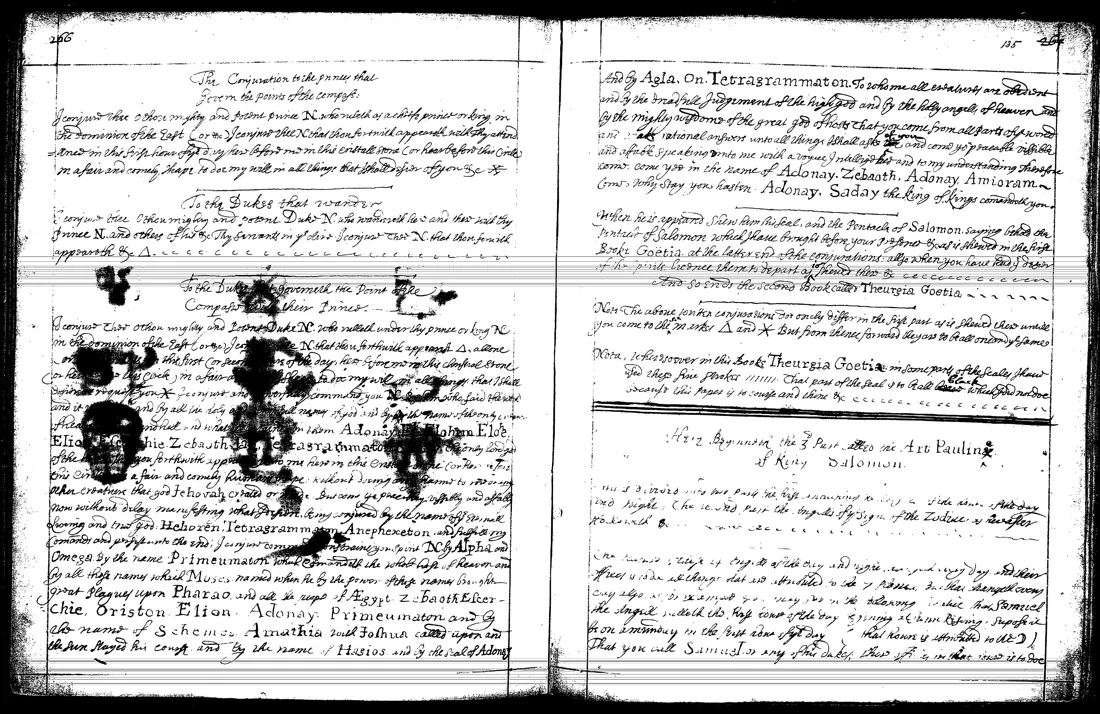
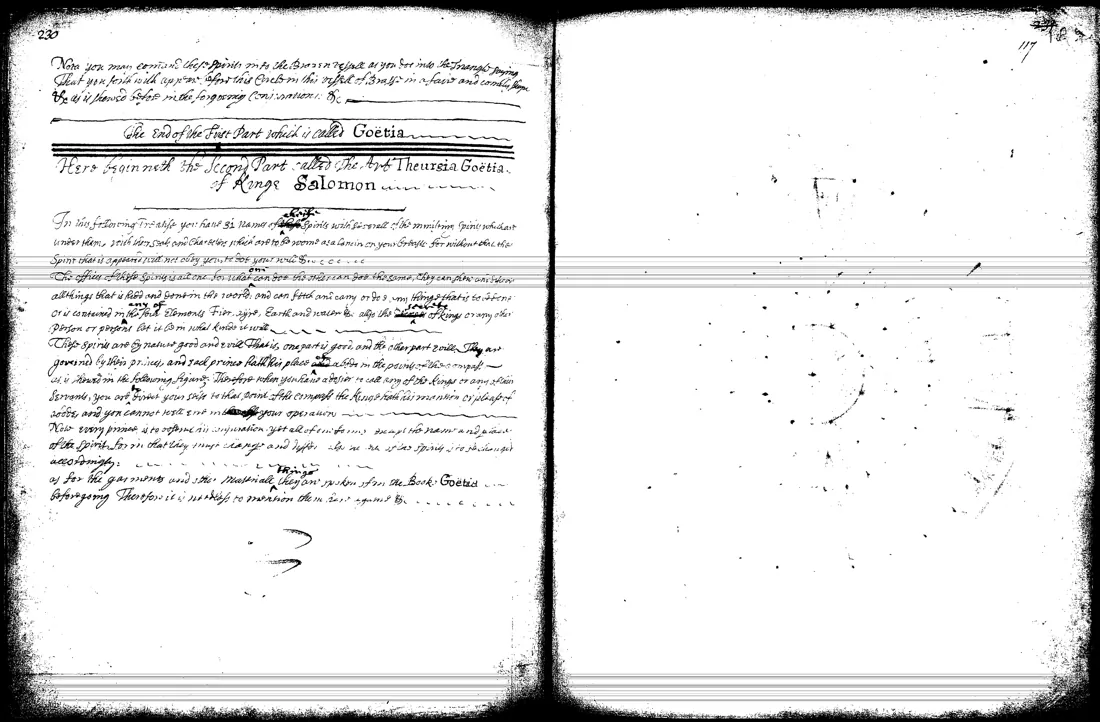
Nota you may command these Spirits into the Brazen vessell as you doe into the Triangle saying That you forth with appeare &c to this Circle in this vessell of Brass in a faire and comely Shape &c as is shewed before in the foregoing Coniuration: &c ⸻
⸻⸻⸻⸻⸻⸻
The End of the First Part which is called Goëtia ═══════════════════════════════
Here beginneth the Second Part called The Art Theurgia Goëtia of Kinge Salomon ⸻⸻⸻⸻⸻⸻
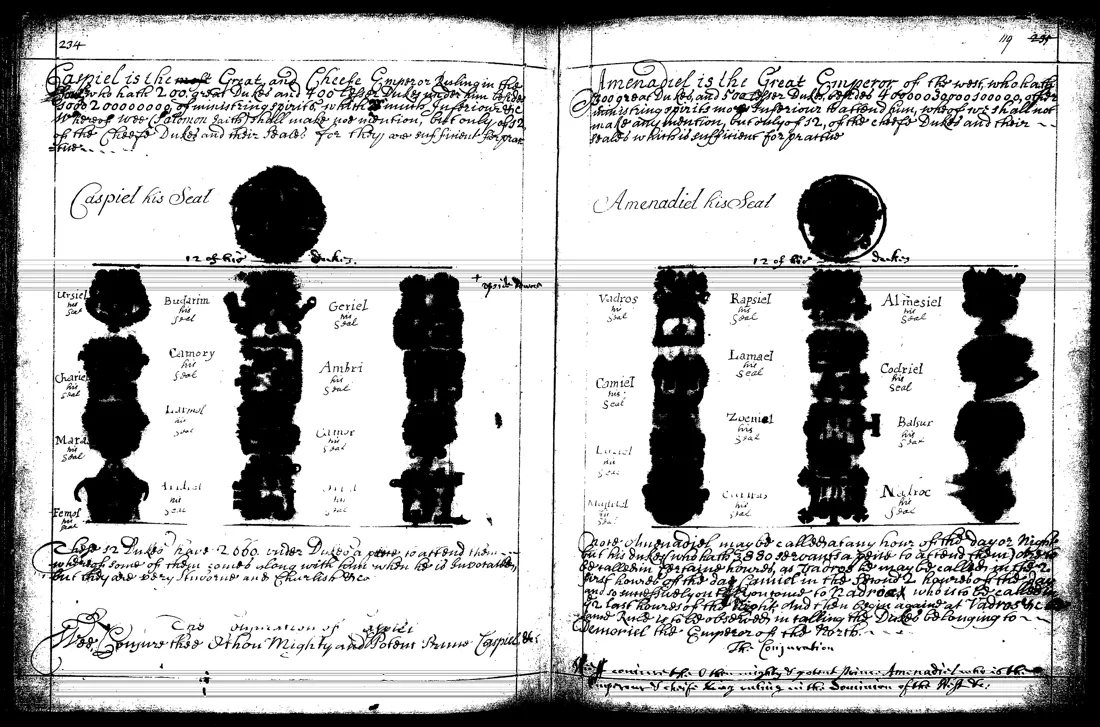
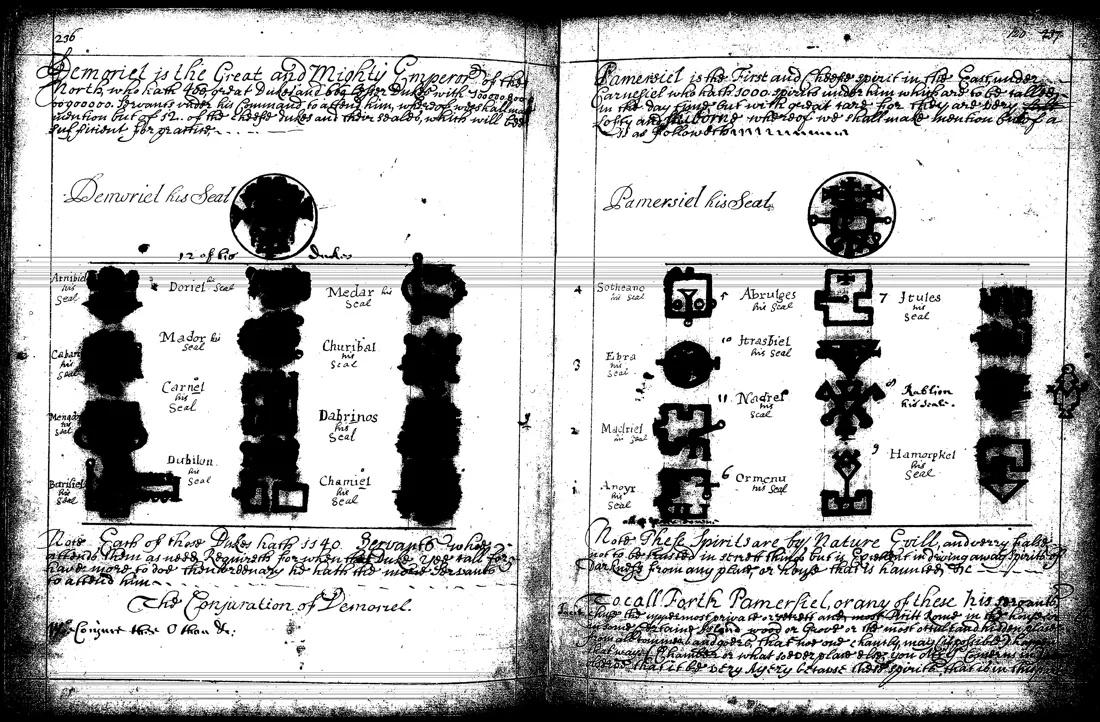
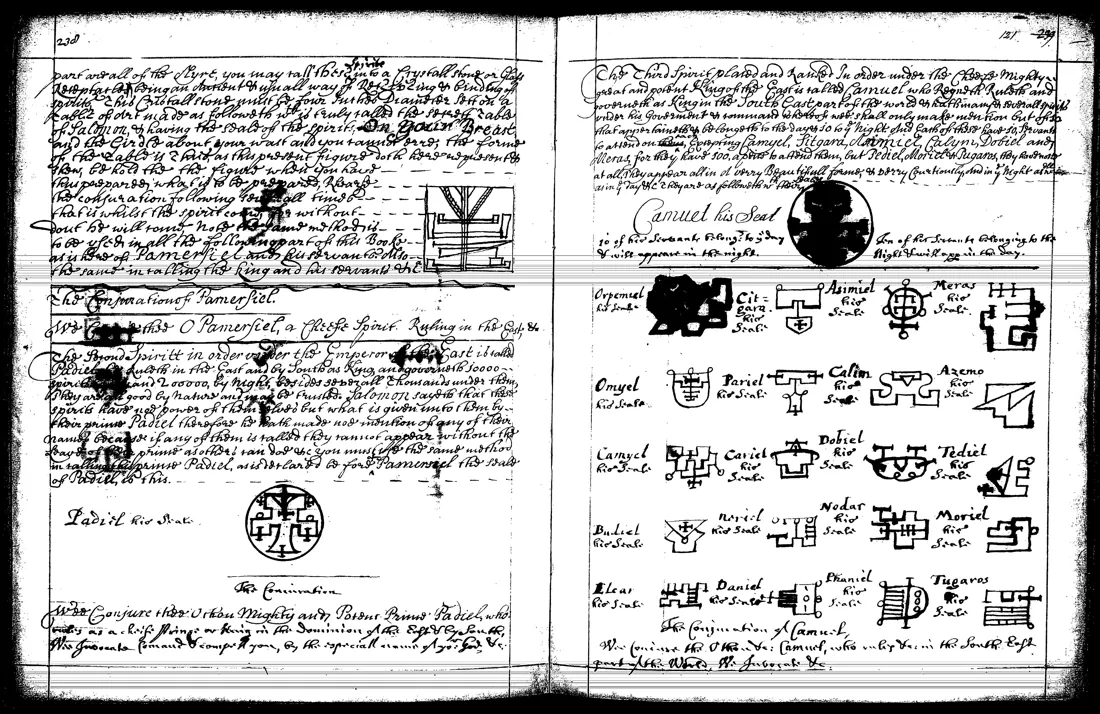
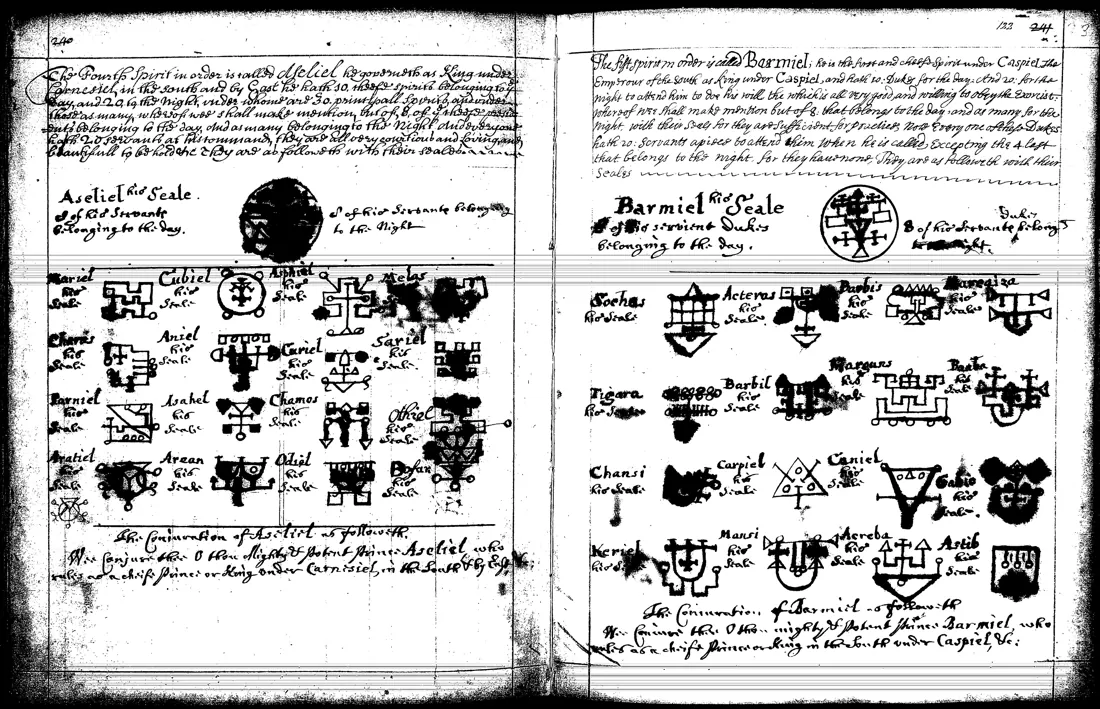
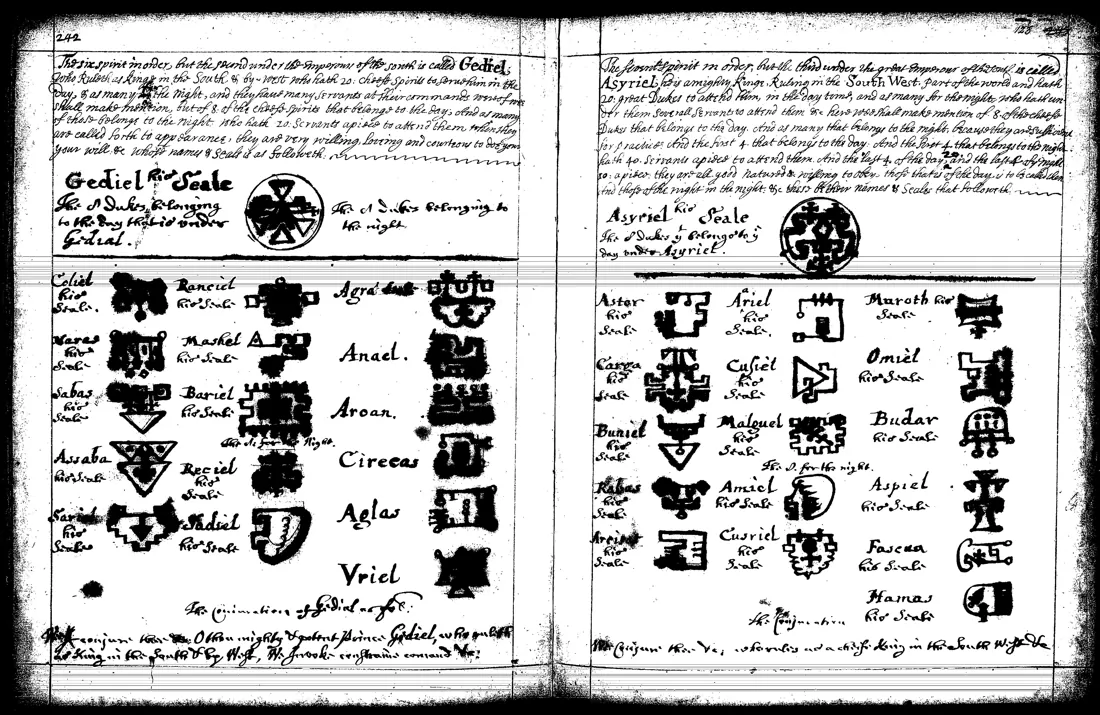
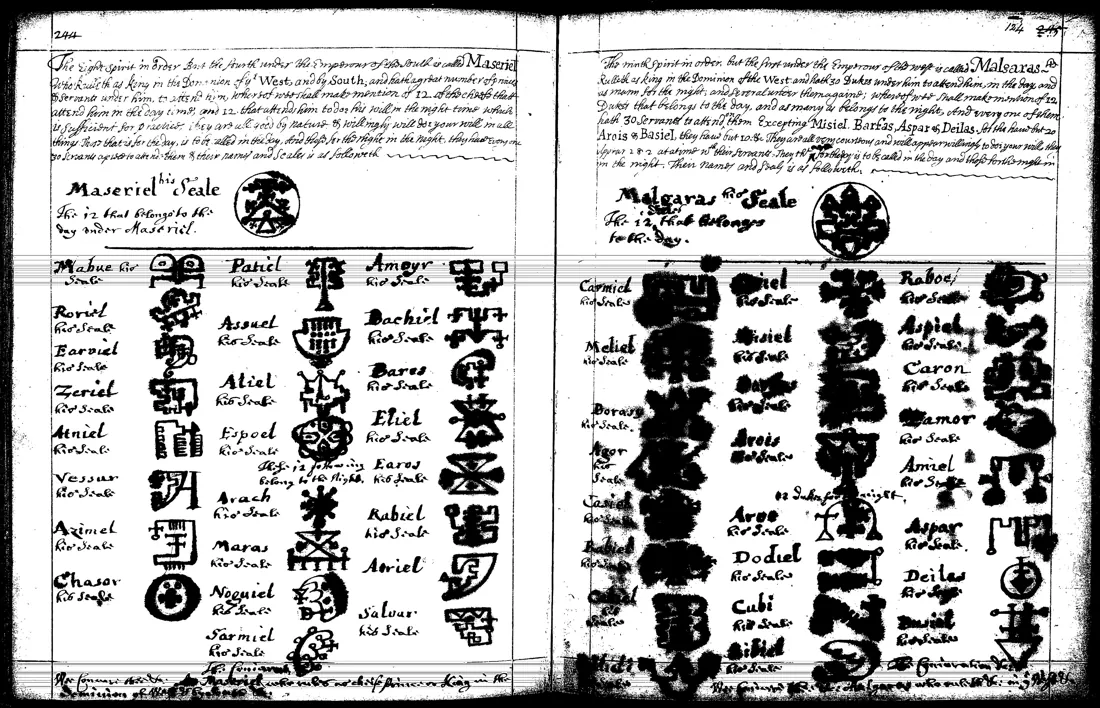
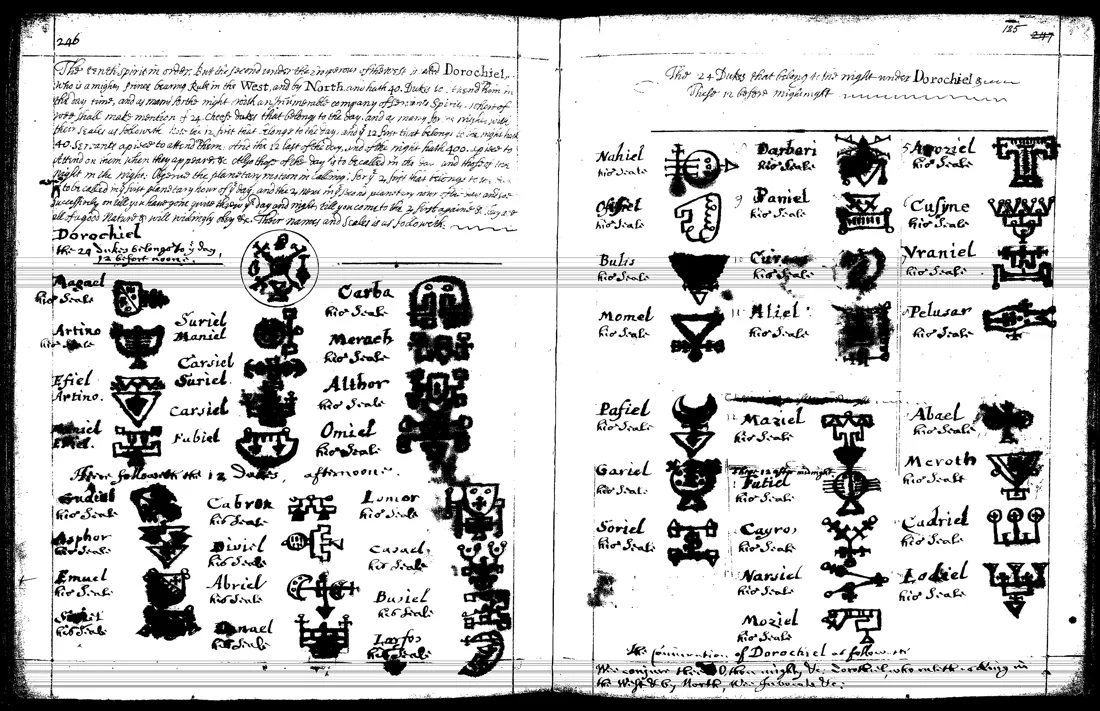
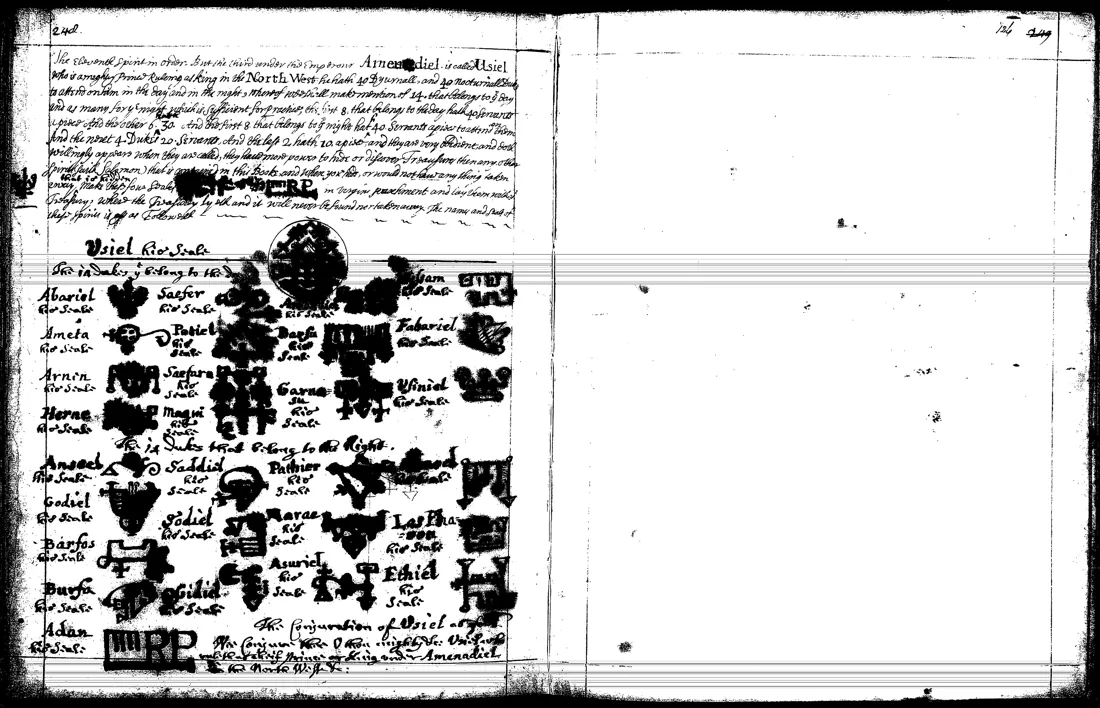
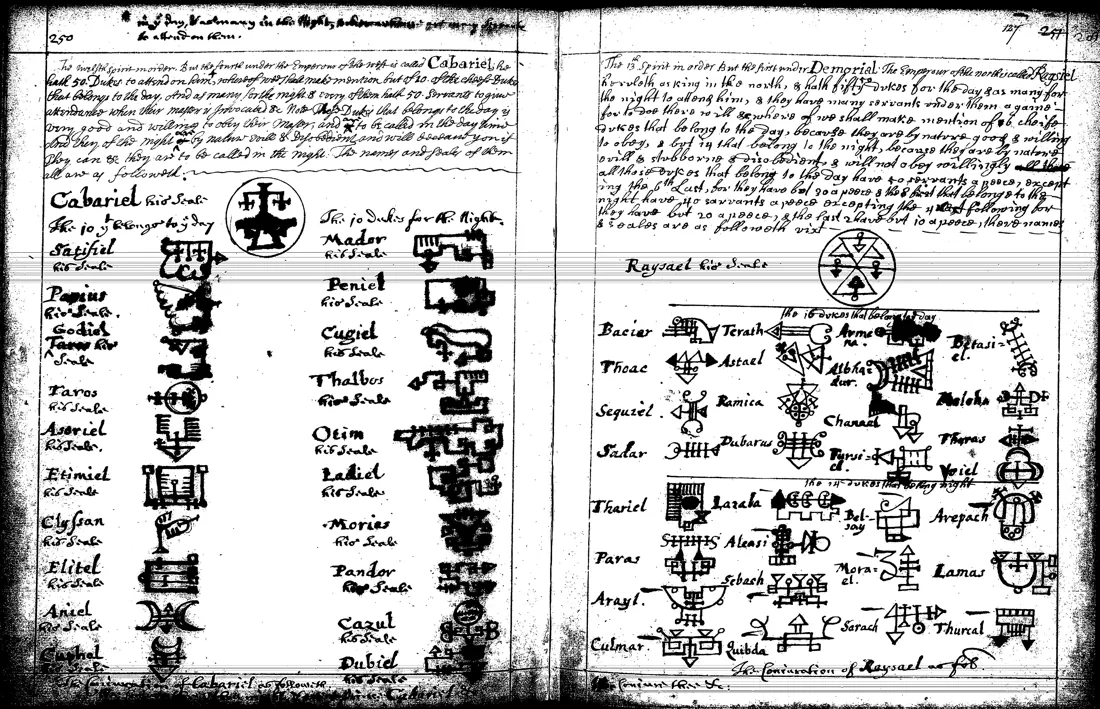
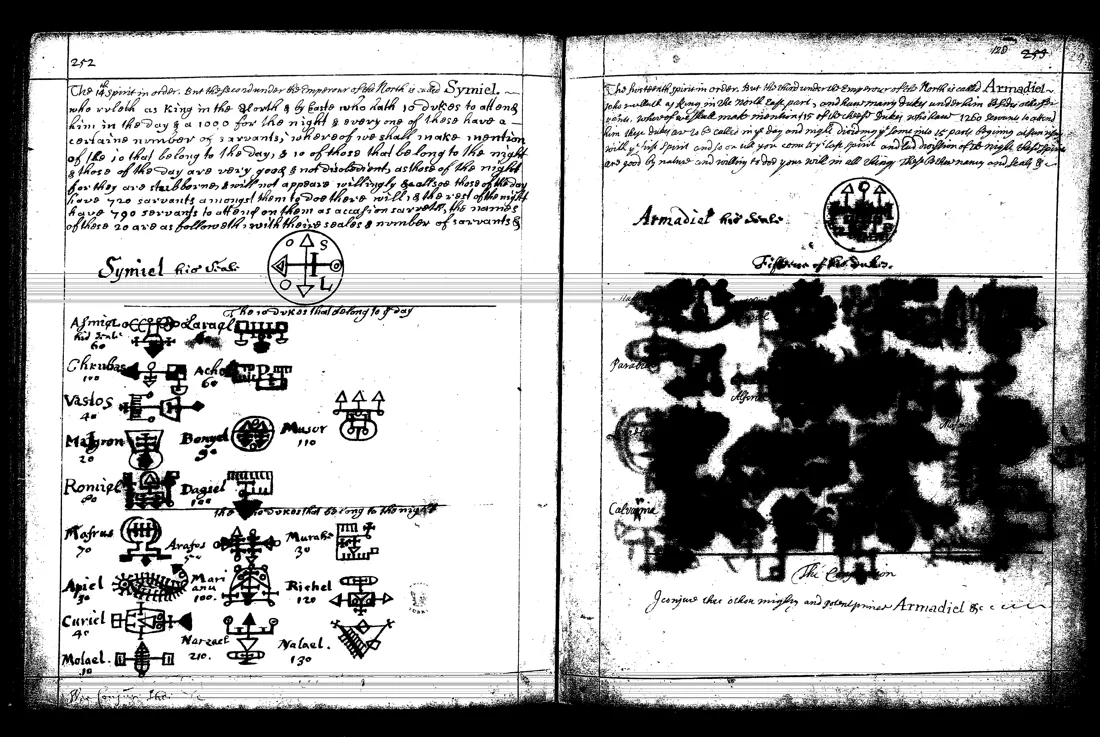
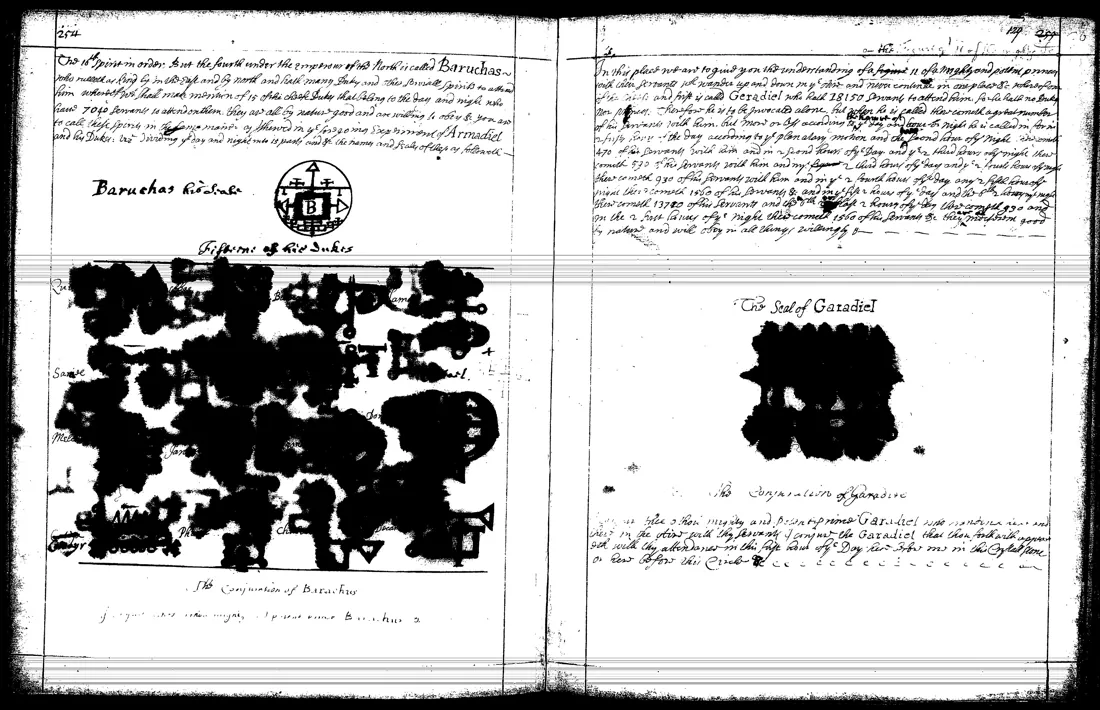
In this following Treatise you haue 31 Names of the [chiefe] [ins. supra] Spirits with severall of the ministring Spirits which are vnder them, with their Seals and Charecters which are to be worne as a Lamin on your breaste for without that the Spirit that is appeared will not obey you, to doe your will &c ⸻
The offices of these Spirits is all one for what [one] [ins. supra] can doe the other can doe the same, they can shew and discou[er] all things that is hidd and done in the world, and can fetch and carry or doe [any of] [ins. supra] any things that is to bee done or is contained in the four Elements Fier, Ayre, Earth and water &c also the [secrets] [ins. supra] of Kinge or any other Person or persons let it be in what kinde it will
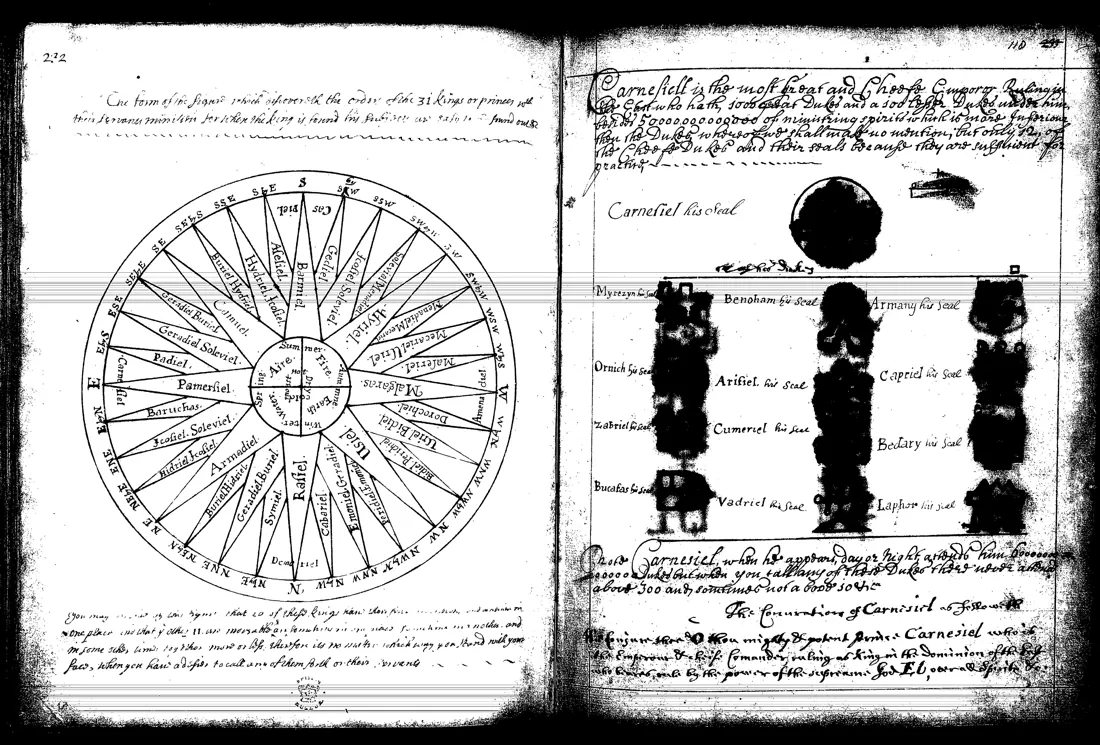
These spirits are by nature good and evill That is, one part is good and the other part evill. They are gouerned by their princes, and each prince hath his place [and] [tach.] abode in the points of the compass ⸻ as is shewed in the following figure, Therefore when you haue a desire to call any of the Kinge or any of their Servants, you are direct your selfe to that point of the compass the Kinge hath his mansion or place of aboode, and you cannot well erre in [the] your operation
Now every prince is to observe his coniuration, yet all of one forme except the name and place of the Spirit, for in that they must varry and differ, also as the spirit is to be changed accordingly:
as for the garments and other Materiall [things] [ins. supra] they are spoken of in the Book Goëtia ⸻ beforegoing Therefore it is needless to mention them here againe &c ⸻⸻⸻
TraducciónEspañol
[Nota final de la primera parte:]
Nota: puedes ordenar a estos espíritus que entren en el vaso de latón igual que haces con el triángulo, diciendo que aparezcáis de inmediato, etc., ante este círculo, en este vaso de latón, en forma hermosa y decorosa, etc., como se ha mostrado antes en la conjuración precedente, etc.
Fin de la primera parte, que se llama Goëtia.
Aquí comienza la segunda parte, llamada El Arte Theurgia Goëtia del rey Salomón.
En el siguiente tratado tienes 31 nombres de los espíritus [principales] con varios de los espíritus ministrantes que están bajo ellos, junto con sus sellos y caracteres, que han de llevarse como una lámina sobre el pecho; pues sin ello el espíritu que ha aparecido no te obedecerá para hacer tu voluntad, etc.
Los oficios de estos espíritus son todos uno mismo, pues lo que [uno] puede hacer, el otro puede hacer lo mismo: pueden mostrar y descubrir todas las cosas ocultas y hechas en el mundo, y pueden buscar y traer, o hacer [cualquiera de] las cosas que hayan de hacerse, o que estén contenidas en los cuatro elementos: fuego, aire, tierra y agua, etc.; también los [secretos] de reyes o de cualquier otra persona o personas, sea de la clase que sea.
Estos espíritus son por naturaleza buenos y malvados; es decir, una parte es buena y la otra parte malvada. Están gobernados por sus príncipes, y cada príncipe tiene su lugar y morada en los puntos del compás, como se muestra en la figura siguiente. Por tanto, cuando tengas el deseo de llamar a alguno de los reyes o a alguno de sus servidores, has de dirigirte hacia aquel punto del compás donde el rey tiene su mansión o lugar de morada, y así no podrás errar apenas en tu operación.
Ahora bien, cada príncipe ha de observar su conjuración, aunque todas son de una misma forma, salvo el nombre y el lugar del espíritu, pues en eso deben variar y diferir; también, según sea el espíritu, ha de cambiarse en consecuencia.
En cuanto a las vestiduras y demás materiales, ya se hablan en el libro Goëtia precedente; por tanto, es innecesario mencionarlos aquí de nuevo, etc.